Team Agents Are Becoming Permissioned Work Channels
Anthropic's Claude Tag and OpenAI's agent adoption data point to the same shift: enterprise agents are moving from private chat windows into shared, permissioned work channels.

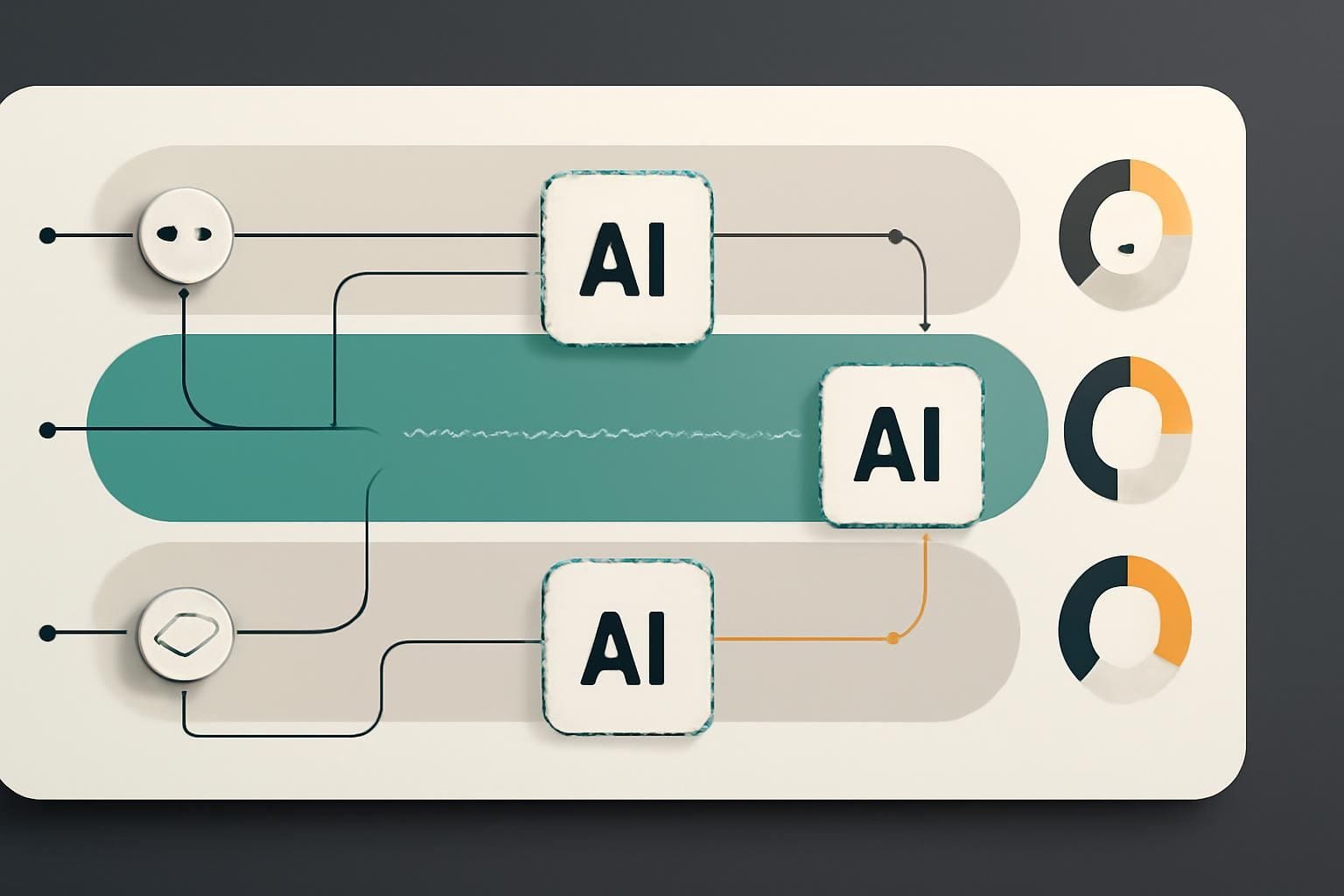
Anthropic launched Claude Tag on June 23 as a beta for Claude Enterprise and Team customers. The product lets teams bring Claude into Slack channels, grant it access to selected channels, tools, data, and codebases, then tag it into work. Anthropic says Claude builds context from the channels it is allowed to see, can remember relevant information, can follow up on unresolved threads, and can pursue tasks asynchronously over hours or days.
OpenAI published a useful adjacent signal on June 25: inside OpenAI, Codex has shifted work from short chatbot interactions toward delegated agent tasks. The company says Codex now accounts for more than 85% of output tokens for the average OpenAI worker, and 99.8% of weekly output tokens internally. It also says non-developer organizational Codex users rose 189-fold since August 2025, and that many users now assign tasks estimated to take more than an hour of human work.
The important thing is not that Slack has another bot; it is that enterprise agents are moving into shared work channels because delegation only scales when memory, permissions, cost, and accountability are attached to where work actually happens.
That is the sharper read for builders and buyers. The enterprise agent product is no longer just a chat box with better reasoning. It is becoming a permissioned work surface: a named agent identity inside a channel, with scoped memory, tool access, token budgets, logs, and a visible thread of who asked for what.
This is a different product category from personal copilots. A personal assistant can be useful with a private context window. A team agent has to survive contact with messy organizational reality: partial permissions, sensitive data, cross-functional requests, unresolved threads, audit requirements, spend limits, and people who need to inspect or continue each other's work.
The User Behavior Changed
Claude Tag's most important design choice is not the Slack integration itself. It is the claim that the agent can become multiplayer. Within a channel, Anthropic describes one Claude interacting with everyone, visible to the group, able to pick up context from prior discussion, and able to learn from selected channels and data sources when administrators grant permission.
That changes the human workflow. Instead of copying context into a private chatbot, the worker tags an agent in the same place where the issue, decision, metric, support ticket, or bug discussion already lives. The channel becomes the task boundary.
OpenAI's internal Codex data points in the same direction from a different angle. When non-technical departments use agents for automation, data transformation, debugging, structured analysis, and work outside their formal job description, the adoption problem stops being "can the model answer?" and becomes "can the organization safely let this person delegate adjacent work?"
That is why the next adoption curve will depend less on demo fluency and more on work-context design. The agent has to know enough to help, but not so much that every channel becomes a data-leak hazard. It has to act asynchronously, but not disappear into a black box. It has to remember, but remember within an administratively meaningful scope.
The Hidden Tradeoff
The obvious benefit is less context repetition. Teams waste time re-explaining product names, customer histories, engineering constraints, and operating norms to AI tools. A channel-aware agent can reduce that friction.
The cost is that "memory" becomes a governance object. Anthropic's setup language is revealing: administrators specify which tools and information Claude can access in which channels, create separate Claude identities for different uses, keep memories scoped to those administrator-defined channels, set token spend limits, and view logs of what Claude did and who requested each task.
Those controls are not administrative afterthoughts. They are the product.
A sales Claude should not leak sales context to engineering. An engineering Claude should not inherit private people-operations discussions. A finance Claude should not turn an exploratory Slack thread into an unreviewed business process. If an agent can schedule tasks for itself and operate over hours or days, then identity, access, memory, and auditability become runtime requirements.
That connects directly to an earlier WisdomChain point about agentic browser automation: once agents act in real environments, state and recovery matter as much as intelligence. Team agents add a new layer. The state is social and organizational, not just technical.
The Buyer Test
Enterprise buyers should stop evaluating team agents only by asking whether the model can summarize, code, search, or draft. Those are table stakes. The better questions are operational:
Can the agent's memory be scoped by workspace, channel, project, role, and time? Can administrators see who delegated a task, which tools were used, what data was touched, and what the agent produced? Can token budgets be set at the organization and channel level? Can sensitive channels opt out? Can a teammate continue the agent's work without inheriting unauthorized context? Can long-running tasks be paused, reviewed, or escalated?
If the vendor cannot answer those questions clearly, the buyer is not evaluating an enterprise agent. It is evaluating a smart assistant with enterprise risk attached.
This also reframes the economic story. OpenAI's Codex data suggests people will delegate longer and more parallel work as agent tools improve. That means spend controls are not just procurement hygiene. They are workflow design. A useful agent may generate far more tokens than a chatbot because it is doing more work: planning, running tools, checking results, retrying, summarizing, and waiting across steps.
The operational buyer will ask where the extra work creates measurable value. The careless buyer will only see a bigger usage bill.
What Builders Should Instrument
The practical move is to treat each team agent as a channel-scoped operating system for work delegation.
Instrument the channel, not just the model call. Track task origin, requester, channel, data sources touched, tools invoked, runtime, token spend, retries, human edits, escalations, and whether the task produced a reusable artifact. Separate private assistance from shared delegation. Measure how often teammates continue a prior agent thread instead of restarting context from scratch.
Builders should also design explicit memory boundaries. "The agent learns over time" sounds powerful, but enterprises will need memory expiration, memory inspection, memory deletion, and different retention policies by function. The more valuable the agent becomes, the more important it is to know what it knows.
This is where AI deployment labor remains scarce. Someone has to translate a messy team workflow into scoped identities, permissions, tools, budgets, and review points. The model may do more labor, but the organizational design work does not vanish.
There is also a link to domain expertise in agentic coding. As agents make execution cheaper, knowing what to delegate, what to review, and which context is safe becomes more valuable. The scarce skill is not typing prompts. It is shaping a work environment where delegation creates leverage without losing control.
What To Watch
The falsifiable indicator is whether enterprise agent vendors start competing on channel-level administration rather than generic intelligence. Watch for product language around agent identities, workspace memory, tool scopes, spend controls, audit trails, unresolved-thread follow-up, and cross-channel context rules.
Also watch whether collaboration platforms become distribution chokepoints. Slack, Teams, IDEs, ticketing systems, CRM systems, and data notebooks are not neutral surfaces. If agents become most useful where the work already happens, then the platforms that control work context will gain leverage over model providers.
The reality check is that a team agent can easily become either too timid or too invasive. Too little access, and it becomes another bot that asks for missing context. Too much access, and it becomes an ungoverned organizational memory system. The winning products will not be the ones that merely join every channel. They will be the ones that make delegation visible, scoped, measurable, and reversible.