AI Signals & Reality Checks: Simulators Become the Moat (Safe Sandboxes for Agents)
Signal: the winning agent platforms will ship safe, high-fidelity sandboxes—simulators and digital twins—so agents can practice before they act. Reality check: if your sandbox drifts from reality, you’re training confidence in a fake world and paying for the tail in production.

AI Signals & Reality Checks (Mar 4, 2026)
Signal
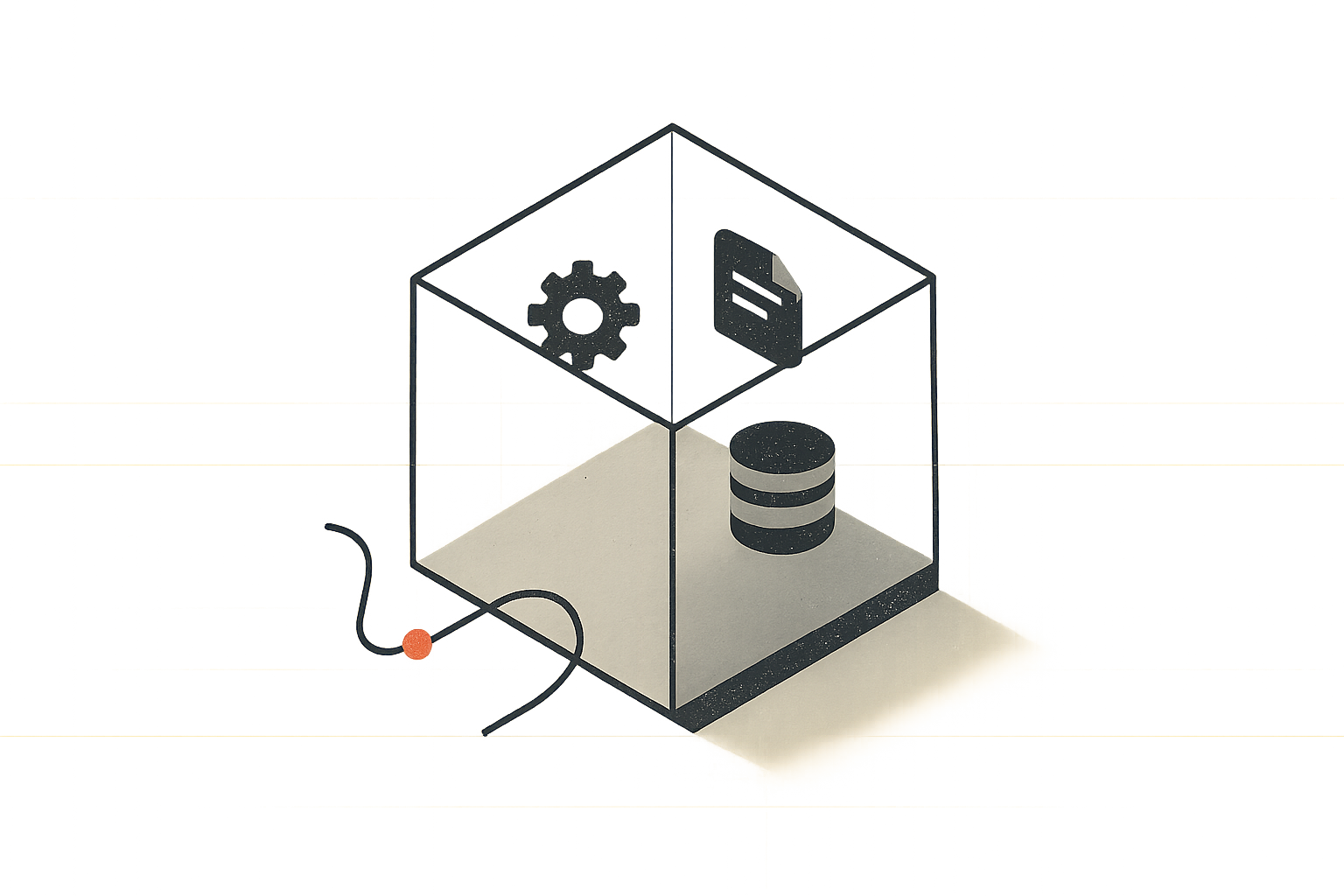
The next product moat for agents won’t be “a better model.” It will be a better simulator—a place where agents can safely practice, fail, and learn before they touch the real world.
As agentic systems move from “answering” to “doing,” teams run into an uncomfortable truth: the real world is a hostile training environment.
- Production data is messy, sensitive, and permissioned.
- Real actions have blast radius.
- Errors are expensive, public, and sometimes irreversible.
So the path of least regret looks like this:
- Route agents through a sandbox first Instead of letting an agent “write to the database,” you give it a staging environment, a “shadow” CRM, a mock ticketing system, or a disposable repo.
The agent can plan and execute end-to-end, but the outputs are quarantined until a human (or a policy engine) promotes them.
- Simulate the tool layer, not just the user interface The naive approach to “agent safety” is UI-level: limit clicks, require approvals, add guardrails.
The better approach is system-level: create simulated APIs with the same schemas, rate limits, and failure modes as the real ones. Agents don’t just need “permissions.” They need a world model of how tools behave when they’re slow, flaky, and inconsistent.
- Make the simulator a dataset factory Once you have a sandbox, you can generate:
- realistic task trajectories,
- controlled edge cases,
- counterfactuals (“what if the tool 500s here?”),
- and repeatable evals.
This turns what used to be “hard-to-reproduce production incidents” into regression tests.
- Treat fidelity as an economic lever High-fidelity simulation is expensive. Low-fidelity simulation is misleading.
The winning teams won’t chase perfect digital twins everywhere—they’ll invest fidelity where it buys down real risk:
- money movement,
- permissioned data,
- irreversible writes,
- compliance workflows,
- and multi-step “compound” actions.
Net: platforms will increasingly compete on “time-to-safe-autonomy,” and simulators are the fastest way to compress it.
Reality check
If your sandbox isn’t tethered to reality, it becomes an optimism machine: agents look capable in simulation and fail in production, precisely where the tail risk lives.
Three common failure modes:
- Schema fidelity without behavioral fidelity A simulator that matches API shapes but not API behavior teaches the wrong instincts.
Real tools:
- time out,
- rate limit,
- return stale data,
- and fail partial writes.
If the sandbox is “always clean,” agents learn to be fragile.
Countermeasure: inject operational noise on purpose—latency distributions, random 429s, stale reads, flaky search. Make the agent earn robustness.
- Over-optimization to the sandbox leaderboard Once a simulator exists, teams start measuring and competing. That’s good—until the agent becomes an expert at the benchmark and bad at the job.
Countermeasure: keep a reality check set—small, carefully curated production traces (sanitized) and a small amount of real-world shadow execution. The sandbox score is a proxy; the shadow run is the truth.
- No explicit risk budget for promotion to production The dangerous moment isn’t simulation. It’s promotion.
If you don’t define:
- what counts as “safe enough,”
- how much uncertainty is acceptable,
- and what receipts must be produced,
then promotion becomes an ad-hoc human debate—or worse, an automatic switch.
Countermeasure: define risk budgets and promotion gates:
- read-only actions can ship with minimal oversight,
- reversible writes require diff previews + receipts,
- irreversible actions require explicit, named approvals,
- and anything cross-system needs a rollback plan.
Bottom line: simulators will be everywhere, but not all simulators create capability. The ones that matter are the ones that stay coupled to reality, teach robustness under operational mess, and connect every “practice world” win to a measurable reduction in production incidents.