AI Signals & Reality Checks: Simulators Become the Moat (Safe Sandboxes for Agents)
Signal: the winning agent platforms will ship safe, high-fidelity sandboxes—simulators and digital twins—so agents can practice before they act. Reality check: if your sandbox drifts from reality, you’re training confidence in a fake world and paying for the tail in production.

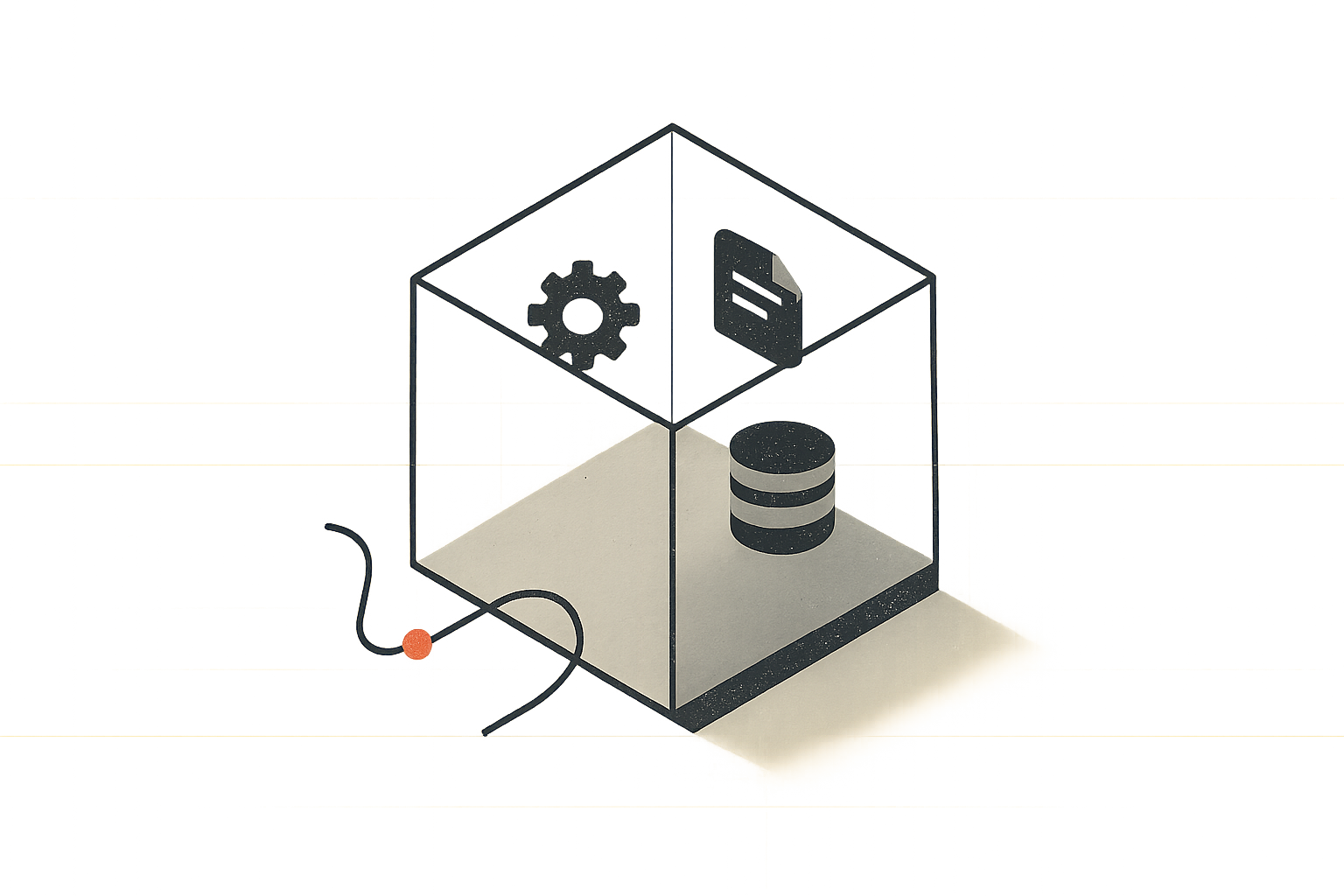
AI Signals & Reality Checks (Mar 4, 2026)
Signal
The next product moat for agents won’t be “a better model.” It will be a better simulator—a place where agents can safely practice, fail, and learn before they touch the real world.
As agentic systems move from “answering” to “doing,” teams run into an uncomfortable truth: the real world is a hostile training environment.
- Production data is messy, sensitive, and permissioned.
- Real actions have blast radius.
- Errors are expensive, public, and sometimes irreversible.
So the path of least regret looks like this:
- Route agents through a sandbox first Instead of letting an agent “write to the database,” you give it a staging environment, a “shadow” CRM, a mock ticketing system, or a disposable repo.
The agent can plan and execute end-to-end, but the outputs are quarantined until a human (or a policy engine) promotes them.
- Simulate the tool layer, not just the user interface The naive approach to “agent safety” is UI-level: limit clicks, require approvals, add guardrails.
The better approach is system-level: create simulated APIs with the same schemas, rate limits, and failure modes as the real ones. Agents don’t just need “permissions.” They need a world model of how tools behave when they’re slow, flaky, and inconsistent.
- Make the simulator a dataset factory Once you have a sandbox, you can generate:
- realistic task trajectories,
- controlled edge cases,
- counterfactuals (“what if the tool 500s here?”),
- and repeatable evals.
This turns what used to be “hard-to-reproduce production incidents” into regression tests.
- Treat fidelity as an economic lever High-fidelity simulation is expensive. Low-fidelity simulation is misleading.
The winning teams won’t chase perfect digital twins everywhere—they’ll invest fidelity where it buys down real risk:
- money movement,
- permissioned data,
- irreversible writes,
- compliance workflows,
- and multi-step “compound” actions.
Net: platforms will increasingly compete on “time-to-safe-autonomy,” and simulators are the fastest way to compress it.
Reality check
If your sandbox isn’t tethered to reality, it becomes an optimism machine: agents look capable in simulation and fail in production, precisely where the tail risk lives.
Three common failure modes:
- Schema fidelity without behavioral fidelity A simulator that matches API shapes but not API behavior teaches the wrong instincts.
Real tools:
- time out,
- rate limit,
- return stale data,
- and fail partial writes.
If the sandbox is “always clean,” agents learn to be fragile.
Countermeasure: inject operational noise on purpose—latency distributions, random 429s, stale reads, flaky search. Make the agent earn robustness.
- Over-optimization to the sandbox leaderboard Once a simulator exists, teams start measuring and competing. That’s good—until the agent becomes an expert at the benchmark and bad at the job.
Countermeasure: keep a reality check set—small, carefully curated production traces (sanitized) and a small amount of real-world shadow execution. The sandbox score is a proxy; the shadow run is the truth.
- No explicit risk budget for promotion to production The dangerous moment isn’t simulation. It’s promotion.
If you don’t define:
- what counts as “safe enough,”
- how much uncertainty is acceptable,
- and what receipts must be produced,
then promotion becomes an ad-hoc human debate—or worse, an automatic switch.
Countermeasure: define risk budgets and promotion gates:
- read-only actions can ship with minimal oversight,
- reversible writes require diff previews + receipts,
- irreversible actions require explicit, named approvals,
- and anything cross-system needs a rollback plan.
Bottom line: simulators will be everywhere, but not all simulators create capability. The ones that matter are the ones that stay coupled to reality, teach robustness under operational mess, and connect every “practice world” win to a measurable reduction in production incidents.
中文翻译(全文)
AI Signals & Reality Checks(2026 年 3 月 4 日)
信号
面向 agent 的下一道产品护城河,未必是“更强的模型”,而是更好的模拟器(simulator):一个让 agent 能安全练习、失败、学习,然后再触碰真实世界的环境。
当 agent 系统从“回答问题”走向“执行动作”,团队会撞上一条不太好听的事实:真实世界是一个极其糟糕的训练场。
- 生产数据混乱、敏感、受权限控制。
- 真实动作有爆炸半径(blast radius)。
- 错误代价高、可见度高,有时甚至不可逆。
因此,最不后悔的路径往往是:
- 先让 agent 走沙盒,再谈上线 与其让 agent 直接“写入数据库”,不如先提供一个staging 环境、一个“影子”CRM、一个模拟工单系统,或者一个一次性仓库。
agent 可以端到端规划并执行,但输出会被隔离,直到人类(或策略引擎)将其提升到生产环境。
- 模拟的是工具层,而不仅是界面层 对“agent 安全”的朴素做法是 UI 级:限制点击、加审批、加护栏。
更好的做法是系统级:提供模拟 API,让它们在 schema、限流、失败模式上都更接近真实系统。agent 不仅需要“权限”,还需要理解工具在现实里如何变得慢、抖、以及不一致——这同样是世界模型的一部分。
- 把模拟器当作数据工厂 一旦你拥有沙盒,就可以规模化生成:
- 更真实的任务轨迹(trajectories),
- 可控的边界条件(edge cases),
- 反事实场景(“如果这里工具 500 会怎样?”),
- 以及可重复的评测(evals)。
过去那些“难以复现的生产事故”,会被转化为回归测试(regression tests)。
- 把“模拟逼真度”当作经济杠杆 高逼真度的模拟很贵;低逼真度的模拟会误导。
会赢的团队不会到处追求完美 digital twin,而是把逼真度投到那些能显著降低真实风险的地方:
- 资金流转,
- 受权限控制的数据,
- 不可逆写入,
- 合规流程,
- 以及多步、跨系统的“复合动作”。
结论:平台会越来越围绕“达到安全自治所需时间(time-to-safe-autonomy)”竞争,而模拟器是压缩这段时间的最快方式之一。
现实校验
如果你的沙盒没有被现实牢牢拴住,它就会变成一台“乐观机器”:agent 在模拟里看起来很强,一到生产就翻车,而且往往翻在尾部风险(tail risk)最大的地方。
三种常见失败模式:
- 只有 schema 逼真,没有行为逼真 一个模拟器如果只对齐了 API 形状,却没对齐 API 的行为,会教出错误的直觉。
真实工具会:
- 超时,
- 限流,
- 返回陈旧数据,
- 发生部分写入失败。
如果沙盒“永远干净”,agent 学到的就是脆弱性。
对策:主动注入运营噪声(operational noise)——延迟分布、随机 429、陈旧读、脆弱搜索。让 agent 通过“脏现实”来获得鲁棒性。
- 过度优化沙盒排行榜 一旦有了模拟器,团队就会开始衡量、对比、卷分数。这是好事——直到 agent 变成“擅长基准、不擅长工作”。
对策:保留一套现实校验集——少量经过脱敏的生产轨迹,以及少量真实系统的影子执行(shadow execution)。沙盒分数是代理指标;影子执行才是事实。
- 没有明确的“提升到生产”的风险预算 真正危险的时刻不是模拟,而是“提升”。
如果你没有定义:
- 何谓“足够安全”,
- 可接受的不确定性有多大,
- 必须提供哪些凭证/收据(receipts),
那么提升就会变成临场争论——或者更糟,变成自动开关。
对策:建立风险预算与提升门槛(promotion gates):
- 只读动作可以较少监督上线,
- 可逆写入必须提供 diff 预览 + receipts,
- 不可逆动作必须有明确、具名审批,
- 跨系统动作必须附带回滚计划。
**一句话总结:**模拟器会无处不在,但不是所有模拟器都能带来能力提升。真正重要的是那些始终与现实耦合、能在运营脏乱中教出鲁棒性、并且能把每一次“练习世界”的胜利转化为可度量的生产事故下降的模拟器。