Secure Agent Runtimes: Autonomy Promise vs. Containment Reality

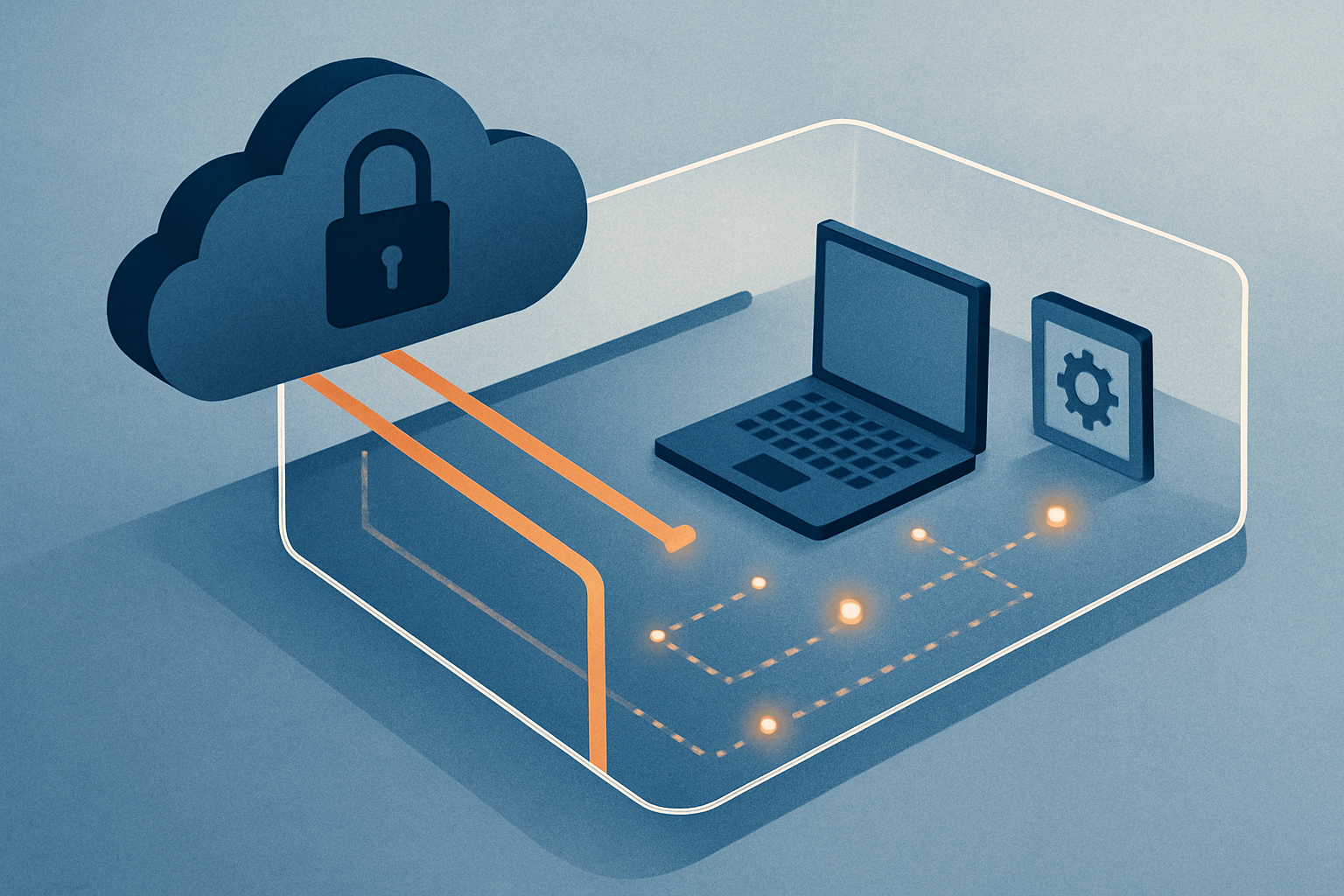
The signal: Enterprise AI is moving from answer generation toward controlled action. The practical question is no longer only whether a model can summarize a document or draft a response. It is whether an AI agent can open tools, inspect files, run commands, update records, trigger workflows, and still remain inside boundaries that a company can understand, audit, and defend.
That is why secure agent runtimes are becoming a more important layer in the AI stack. Recent enterprise announcements around autonomous desktop agents, governed workflow platforms, sandboxed execution, and AI control towers all point in the same direction: the market is realizing that autonomy without containment is not deployable autonomy. If an agent can touch local files, terminals, browsers, APIs, tickets, knowledge bases, and internal systems, then the runtime around the agent matters almost as much as the model inside it.
A secure runtime is not just a technical wrapper. It is the place where enterprise promises become enforceable. It defines what the agent can see, which tools it can call, which actions need approval, which data must stay isolated, how secrets are protected, where logs are written, and what happens when the agent fails. In a chat-only product, these controls may feel optional. In an agent that can act across real systems, they become the difference between a useful assistant and an unmanaged insider risk.
The business signal is strong because agent demos are becoming more ambitious. Knowledge workers want systems that can handle multi-step work instead of merely offering suggestions. IT teams want agents that can investigate incidents, modify configurations, or prepare fixes. Developers want coding agents that can operate inside repositories and terminals. Operations teams want agents that can move between tickets, dashboards, spreadsheets, and ERP-like systems. All of this requires an execution environment, not just a model endpoint.
This also explains why governance is shifting closer to the action layer. Policy cannot live only in a slide deck or procurement checklist. It has to be embedded where the agent decides, calls tools, receives outputs, retries, escalates, and writes changes. The runtime becomes the enforcement point for least privilege, action approval, network isolation, data access, trace capture, and rollback hooks.
The reality check: A secure runtime reduces risk, but it does not make agent autonomy automatically safe.
The first hard problem is permission design. Companies often do not know their own access boundaries as clearly as they think. A runtime can enforce policies, but someone still has to define the policies. Which files can the agent read? Which API scopes are acceptable? Can it see customer data? Can it write to production? Can it execute shell commands? Can it install packages? Can it email someone? The safest answer is rarely the most useful answer, and the most useful answer is rarely safe without careful constraints.
The second hard problem is context leakage. Agents need context to be useful, but every additional document, ticket, credential, or tool output expands the attack surface. A sandbox can restrict filesystem access, but it cannot fully solve prompt injection, poisoned documents, misleading tool results, or users who paste sensitive material into the wrong place. Runtime controls must be paired with retrieval discipline, data classification, and output review for high-consequence actions.
The third hard problem is observability. Enterprises do not just need to know the final answer. They need to know the path: what the agent read, which tool it called, what it changed, why it stopped, and where it expressed uncertainty. Without durable traces, teams cannot debug failures, prove compliance, compare versions, or improve workflows. A secure runtime without understandable logs can become a black box with better marketing.
The fourth hard problem is recovery. Autonomy is attractive because it promises less human coordination. But when an agent makes a bad change, the organization needs fast containment: pause, revoke, roll back, notify, and learn. Many AI programs over-invest in launch controls and under-invest in incident response. That is backwards. The more authority an agent receives, the more important recovery design becomes.
The best near-term strategy is not to give agents broad freedom and hope the runtime catches everything. It is to start with narrow, high-value workflows; grant explicit tool access; require human approval for irreversible actions; log every step; test adversarial cases; and expand autonomy only after the failure modes are visible. In practice, secure agent runtimes should be treated like application infrastructure, security infrastructure, and audit infrastructure at the same time.
This will change vendor selection. Buyers should ask not only which model powers an agent, but how the agent is contained. Can policies be expressed per workflow? Are secrets isolated? Are tool calls logged with inputs and outputs? Can permissions be simulated before deployment? Is there a kill switch? Can a failed action be reversed? Can logs be exported to existing security and compliance systems? These questions sound less glamorous than benchmark scores, but they are closer to production reality.
Key points to remember:
- Autonomy needs an execution layer - Enterprise agents require governed runtimes, not just stronger models.
- Containment is now a product feature - Tool access, filesystem scope, network boundaries, and approvals shape deployability.
- Policies must be operational - Governance has to live where actions are taken, not only in documentation.
- Logs are part of safety - Durable traces make failures debuggable, auditable, and improvable.
- Recovery matters as much as prevention - Kill switches, rollback paths, and incident workflows are core requirements.
The bottom line: The signal is that enterprise AI autonomy is becoming infrastructure-led. Secure runtimes, sandboxes, control towers, and action fabrics are signs that the market is growing up. The reality check is that containment is not magic. Companies still need disciplined permissions, careful context management, strong observability, and recovery plans before giving agents meaningful authority. The winning systems will not be the ones that merely act more freely. They will be the ones that act within boundaries people can trust.