Codex Is Becoming a Workload Placement Product
The Dell/OpenAI Codex partnership is less about on-prem checkbox buying and more about where agentic work can legally, economically, and operationally run.

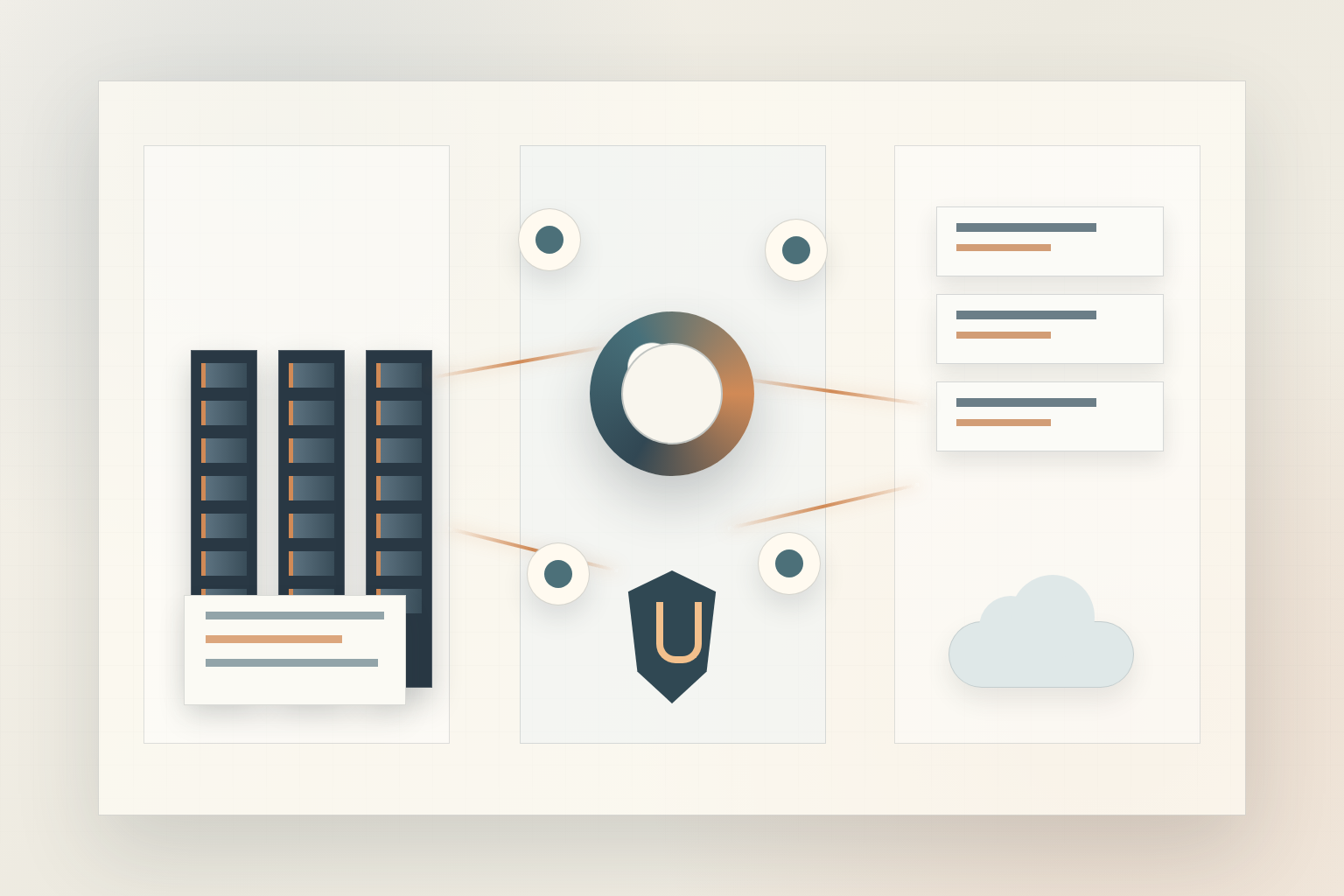
Codex Is Becoming a Workload Placement Product
The important thing is not that Codex is getting another enterprise channel. It is that coding agents are becoming workload-placement products because the useful work sits inside codebases, tickets, documents, credentials, logs, and deployment systems that cannot always move to the agent.
That is the sharper read on OpenAI and Dell's May 18 announcement that Codex will be brought into hybrid and on-premises enterprise environments. OpenAI said more than 4 million developers now use Codex every week, and it framed the partnership around connecting Codex to Dell AI Data Platform and exploring deeper links with Dell AI Factory. Dell's own ecosystem write-up uses similar language: Codex is not just being sold as a cloud tool, but as something that can connect with on-prem data platforms, infrastructure, and enterprise AI workloads.
The easy interpretation is procurement-friendly: big companies want AI agents but need security, sovereignty, and compliance. True, but too bland. The more useful interpretation is that agentic software work has exposed a placement problem. A coding assistant that only reads public files can live anywhere. A coding agent that investigates a flaky internal service, reads incident history, modifies a private monorepo, queries a governed data platform, drafts a deployment plan, and opens a change request is touching several protected systems at once. The question becomes less "Which model is best?" and more "Where is the agent allowed to execute the loop?"
The named mechanism is context gravity. In ordinary SaaS, data can often be copied into a product's workspace, transformed, and returned. In agentic work, the useful context is not a neat file upload. It is a live graph of repositories, build systems, secrets managers, observability traces, policy constraints, ownership maps, and approval flows. The more valuable the task, the heavier that graph becomes. Eventually the agent has to move closer, or the operator has to bridge every boundary.
That is why the Dell signal matters today, even though on-prem AI has been discussed for years. This is not just "run a model in your data center." It is "run an agentic harness near the systems that decide whether work is valid." OpenAI's announcement explicitly points beyond code review and test coverage into incident response, large-repository reasoning, report preparation, feedback routing, follow-ups, and coordination across business systems. Those tasks are not pure language tasks. They are permissioned workflow tasks.
The missed tradeoff is that moving agents closer to enterprise data can reduce data exposure while increasing operational responsibility. A cloud-only agent can improve quickly, hide infrastructure complexity, and ship product changes centrally. A hybrid or on-prem agent path gives customers more control over data locality, latency, integration, and policy, but it also creates new burdens: version management, audit logging, tool permissioning, recovery behavior, capacity planning, and incident ownership. Buyers may ask for control as if it were a feature. Operators will discover it is also a job.
This changes user behavior inside companies. Developers will not simply "use Codex" as a single product. Some will use a fast hosted assistant for routine edits. Security-sensitive teams may demand local execution for regulated repositories. Platform teams may create approved agent workspaces with prewired access to ticketing, CI, artifact stores, and observability. Business teams may ask for the same agent layer to prepare reports or route customer feedback. The product surface shifts from a chat box to an access pattern.
The second-order consequence is distribution pressure on the AI stack. If Dell becomes a credible path for bringing frontier agents near controlled infrastructure, hyperscalers, systems integrators, private-cloud vendors, and developer-platform companies all have to answer the same placement question. The competition is no longer only model quality or per-token price. It is which channel can make agents useful without forcing customers to centralize every sensitive workflow in someone else's cloud.
There is also a builder implication that is easy to underprice: agent products need a placement architecture early. Treat execution location, data boundary, credential scope, tool access, observability, and human approval as first-class product dimensions. A serious platform should know whether a task can leave the tenant, needs repository-local tools, can run in a sandbox, must preserve logs for audit, and who owns a failed action. If those controls arrive after adoption, every enterprise deployment becomes a custom integration project.
The counterargument is straightforward. Hybrid and on-prem announcements can be more channel theater than product reality. They may help sales teams reassure risk committees before the integration is deep enough to matter. OpenAI and Dell did not provide a detailed rollout timeline in the announcement, and "explore how Codex can connect" is not the same as a mature, widely deployed operating model. A hosted product may still be simpler and better for many teams, especially where source code is already in cloud development platforms and compliance requirements are manageable.
Still, the falsifiable watch-next indicator is clear. Watch whether Codex deployments start being described in terms of execution zones, approved tool graphs, audit trails, data-plane locality, and task-level service guarantees rather than seats or generic adoption. Watch whether Dell, OpenAI, and enterprise customers publish concrete reference architectures: which parts run on-prem, which calls still leave the environment, how credentials are scoped, how logs are retained, and who signs off on autonomous changes. Also watch whether buyers separate "developer assistant" budgets from "agent runtime" budgets.
The practical takeaway is not that every AI agent must go on-prem. It is that the best agent will not always be the agent with the best model in isolation. It will be the agent that can legally and reliably sit where the work happens. For software teams, that means the next wave of differentiation is less about autocomplete quality and more about controlled proximity to the systems of record.
Reality check: coding agents are not just IDE features anymore. They are distributed work executors. Once they touch private context, the real product question becomes placement.