On-Device AI Is Becoming a Device Stack Problem
The important thing is not that AI is moving to the phone; it is that local inference only works when chips, SDKs, and offline actions line up.

On-Device AI Is Becoming a Device Stack Problem
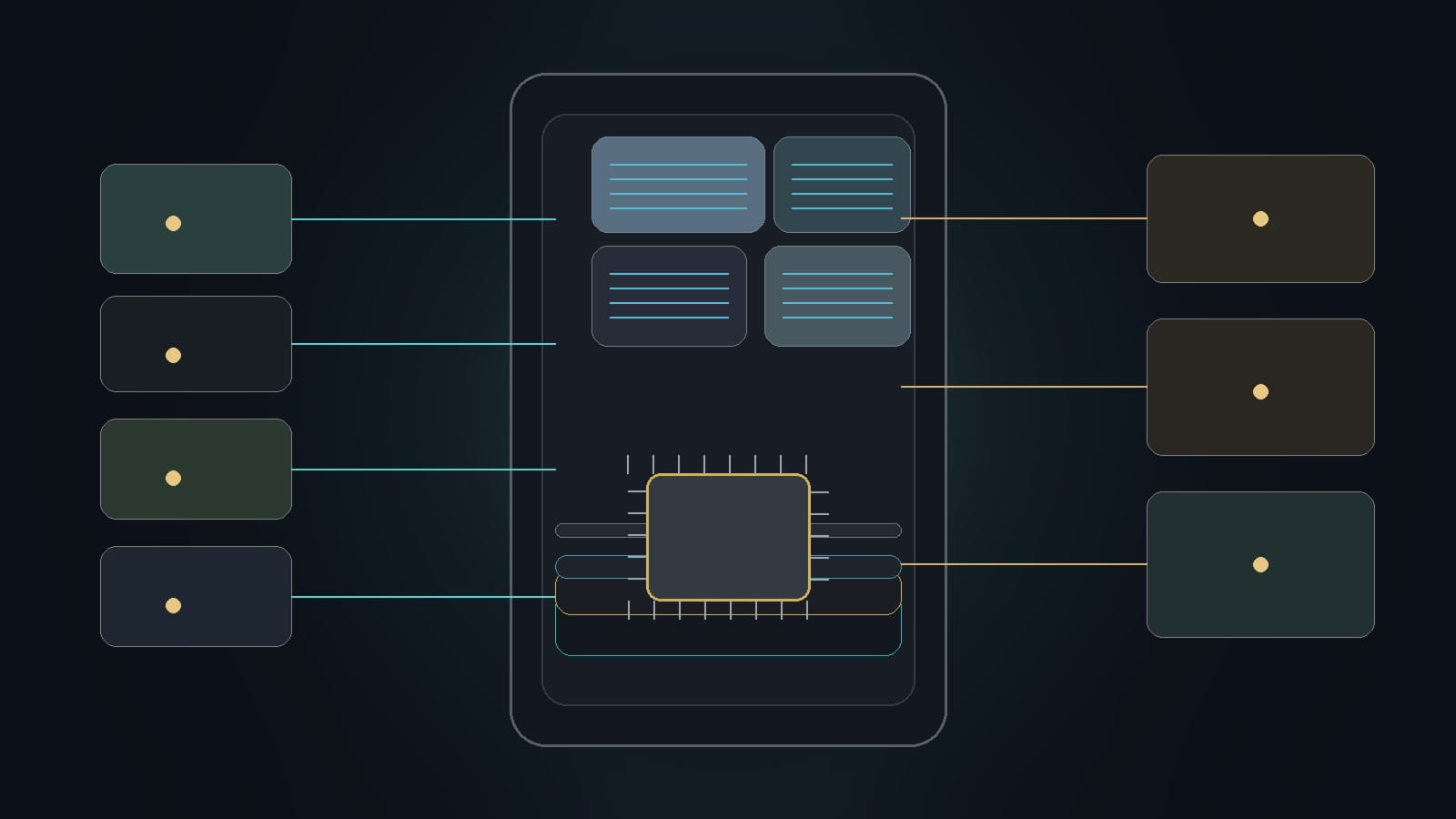
The important thing is not that AI is moving to the phone; it is that local inference is becoming a device-stack problem because quality, privacy, latency, and offline usefulness now depend on whether silicon, SDKs, and action surfaces line up.
Google’s latest Pixel/Tensor push made that visible in a way that generic “edge AI” talk usually does not. In its July 13 showcase, Google said Gemma 4 E2B for TPU is designed to run natively on Pixel hardware, with offline features that include AI chat, image understanding, transcription, travel planning, recipe guidance, and device actions. Android Authority’s coverage made the same point more bluntly: Google is shifting Pixel intelligence from the cloud to the device so requests can be processed locally, even when the network is unavailable.
That is more than a privacy story. It is a product architecture story.
For the last few years, “on-device AI” sounded like a simple deployment choice: keep more data on the phone, reduce round trips, and maybe save a little inference cost. The new signal is that the phone itself is becoming the control plane. Once the model runs locally, the real constraints move to memory footprint, thermal budget, battery drain, chipset support, SDK ergonomics, and whether the app can actually do something useful without calling home every few seconds.
That shift matters because local intelligence is only valuable when the whole stack supports it. A device can run a tiny model and still deliver a disappointing product if the action layer is weak. A user does not care that a transcription model fit on the phone if it cannot hand the text into notes, reminders, travel planning, or device controls without clumsy handoff. Likewise, a local assistant is not compelling if it is fast but brittle on longer tasks, or private but unable to connect the last mile to real device behavior.
The mechanism here is not just “smaller models.” It is the collapse of the gap between inference and action. Google’s announcement bundles the model, the TPU, and the Mobile Actions idea into one story because the winning surface is no longer a chat response. It is a locally executed workflow: hear, interpret, decide, and trigger something useful on the device without a server trip.
That has a second-order consequence for developers. If you build for on-device AI, you are no longer just choosing a model endpoint. You are choosing how much of the product has to be specialized for one hardware tier, how much behavior degrades gracefully on weaker devices, and how much of your UX needs to be rebuilt around offline-first assumptions. In other words, “edge AI” starts to resemble mobile platform engineering again, not just model integration.
That is also why the current wave of model-picking and inference routing matters. If you read AI Bills Are Becoming the Real Model Selection Test, the cost lesson was that model choice now depends on workload economics. On-device AI extends that logic downward: model choice now also depends on whether the device can absorb the memory, latency, and battery tradeoffs of local execution at all. And if you want the broader control-plane view, Inference Is Becoming the Product Roadmap is still the cleanest frame. On-device AI is just the same roadmap pushed all the way to the handset.
There is another reason this is strategically interesting: offline AI changes the buyer’s definition of reliability. Cloud AI fails when the server or network fails; device AI fails when the stack cannot hold together under real-world constraints. That means the bar is no longer simply “does the model answer accurately?” The bar becomes “does the phone still feel trustworthy when the user is on a plane, in a basement, in a retail floor, or in a privacy-sensitive setting?”
That is a harder test than many demos imply. A local assistant can impress in a keynote and still lose in practice if battery anxiety, limited device support, or fragmented capabilities make the feature feel inconsistent. In consumer markets, inconsistency kills habit. In enterprise or field-service contexts, inconsistency kills rollout.
The sharp read is that on-device AI is likely to bifurcate. One path will be premium hardware experiences where silicon and model design are co-optimized. The other will be partial local helpers that handle narrow tasks and quietly hand off to the cloud when they run out of room. The winners will not be the teams with the loudest “private AI” claim. They will be the teams that can make the stack feel coherent enough that users stop noticing where the model runs.
The watch-next indicator is simple: watch whether developers start describing device AI in terms of stack support rather than model novelty. If the conversation shifts toward memory budgets, offline action reliability, thermal behavior, and SDK maturity, then on-device AI has become a real platform category. If not, it is still mostly a demo story.
Internal links
- AI Bills Are Becoming the Real Model Selection Test
- Inference Is Becoming the Product Roadmap
- 中文 companion: 端侧 AI 正在变成设备栈问题