AI Bills Are Becoming the Real Model Selection Test
Rising AI bills are changing how teams choose models. The real test is no longer benchmark rank but whether a model fits the workload, controls spend, and survives finance scrutiny.

AI Bills Are Becoming the Real Model Selection Test
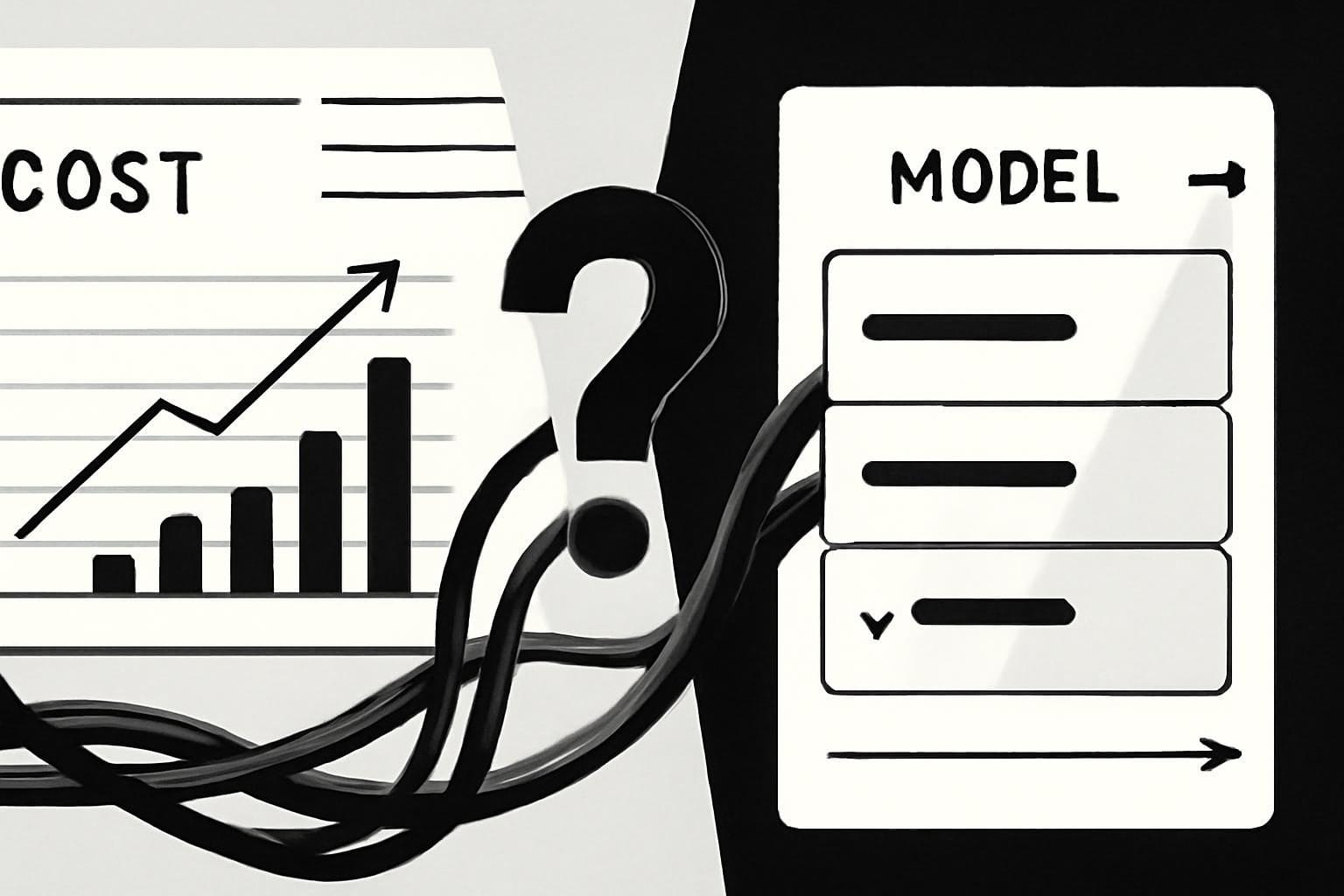
The important thing is not that model quality keeps improving; it is that AI spend is now forcing teams to choose models the way they choose cloud vendors: by total cost, usage pattern, and who has to defend the invoice.
Reuters reported on June 29 that cheaper AI is not automatically winning, because soaring bills are reshaping how businesses choose models. Another Reuters item from June 26 said OpenAI is deferring a public rollout of GPT-5.6 in the U.S. while some customers seek early access to frontier models. Put together, those signals point to a market that is moving from “Which model is best?” to “Which model can we actually afford to operationalize?”
That shift matters because model selection is no longer a one-time product decision. It is becoming a finance and operations workflow. The buyer is not just the engineer or the PM; it is also the person who gets asked why a pilot became a recurring line item. Once that happens, benchmark wins matter less than the shape of consumption: context length, retry rate, latency tolerance, peak usage, and whether the model’s behavior creates hidden downstream labor.
You can already see the mechanism. Teams do not just compare a flagship model against a cheaper one on abstract tasks. They compare the full bill under real usage. A model that is slightly weaker on paper can be the better choice if it reduces over-generation, cuts rework, or avoids expensive escalations. That means the hidden product question is not “What is the smartest model?” but “What combination of model, prompt, routing, and guardrails produces the lowest reliable unit cost?”
This is why the market is starting to reward instrumentation, not just raw model access. If a company cannot tell which prompts, users, workflows, or tools are burning tokens, it cannot make a serious selection decision. The real advantage goes to teams that can measure cost by task and route traffic accordingly. That is a stronger moat than casually saying a model is “good enough.”
There is also a second-order consequence that is easy to miss. As spend visibility increases, AI procurement gets more conservative, not less. Leaders do not simply buy the best model; they buy the model they can justify to finance, legal, and procurement. That can slow adoption of the most capable frontier systems even when the technical case is strong. In other words, the constraint is not only capability. It is explainability at the line-item level.
That creates a new product wedge for builders. The winning layer may not be the model itself; it may be the control plane around model usage. Think routing rules, budget caps, confidence-based fallback, per-workflow evaluation, and invoice-aware observability. The teams that can answer “Why did we spend this much on this workflow?” will move faster than teams that still treat usage as an afterthought.
The same logic also changes how vendors position themselves. Model providers will keep talking about quality, context, and reasoning. Buyers will keep asking about predictability, discount structure, and the operational cost of failure. The vendor that makes spend legible can often win even if it is not the absolute best model on a benchmark.
For builders, the watch item is simple: does model selection increasingly happen in dashboards and billing reviews instead of demo rooms? If yes, the real competition has moved from model performance to cost governance. That is a much harsher market, but also a more durable one.
中文版见 AI 账单正在成为模型选择的真正测试.
One useful internal read on this shift is Inference Is Becoming the Product Roadmap, which shows how the economics surface inside product planning. Another is AI Deployment Labor Is Becoming the Scarce Layer, because cost only matters once teams can actually operationalize a model at scale. Model Access Is Becoming a Policy Dependency is the policy-side version of the same story: access, price, and control are all turning into dependencies that shape what gets deployed.