AI Signals & Reality Checks: The Latency Tax (Agentic Isn’t Free)

AI Signals & Reality Checks (Feb 21, 2026)
Signal
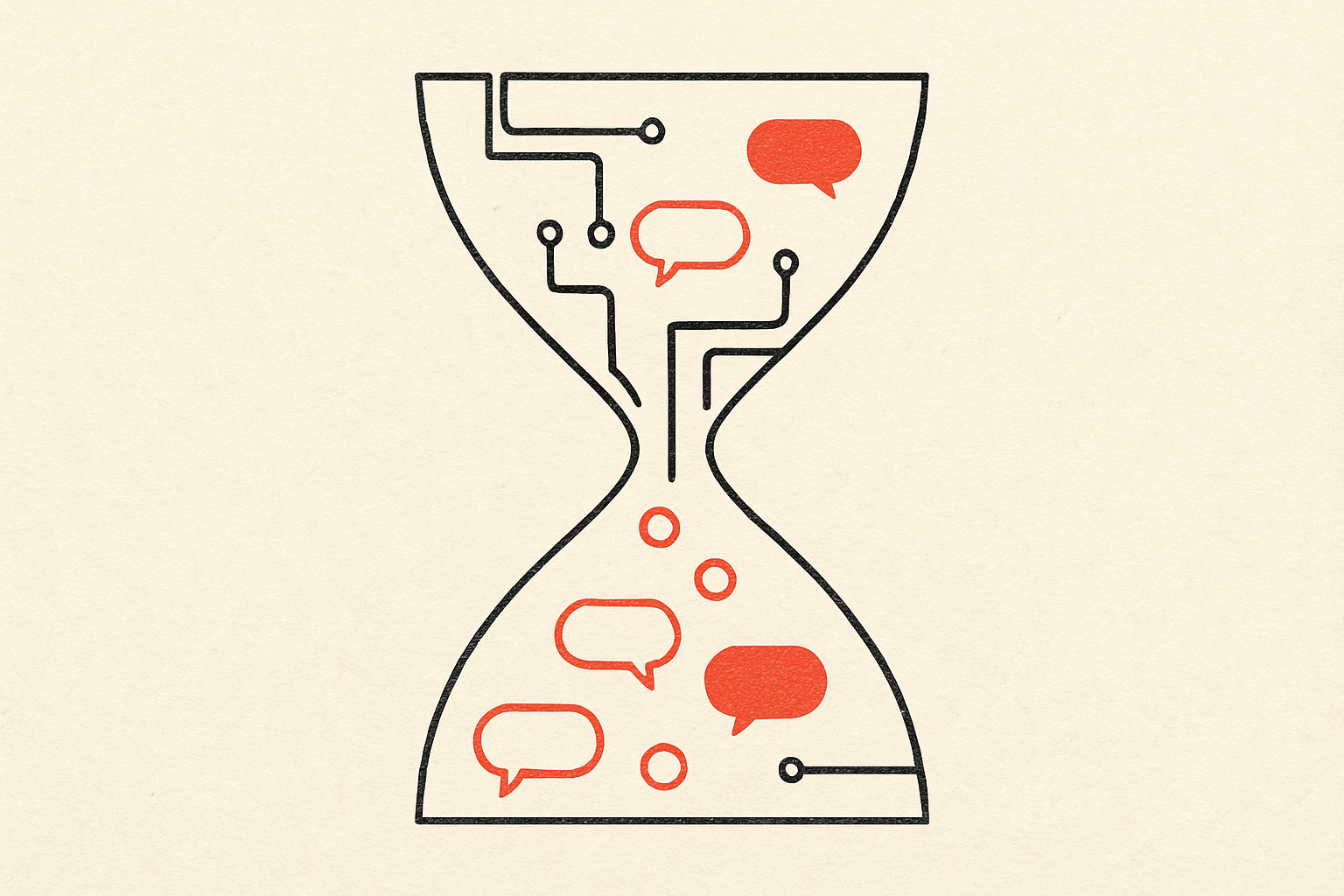
The biggest limiter on ‘agentic’ products in 2026 isn’t model IQ—it’s the latency tax created by multi-turn tool use.
When teams demo agents, the story is usually capability-first:
- “It can book flights.”
- “It can reconcile invoices.”
- “It can triage incidents.”
In production, the first complaint is rarely “it’s not smart enough.” It’s: “Why does this take so long?”
The problem is compounding delay.
A simple chat reply is one request/response. An agentic workflow is a chain:
- interpret intent
- pick tools
- call tool A
- read result
- call tool B
- ask for approval
- wait
- execute
- verify
- summarize
Even if each step is “only” 1–3 seconds, the user experiences the sum, plus the awkwardness of waiting without clear progress. And real systems add more:
- network jitter
- rate limits
- slow SaaS APIs
- retries
- human approval latency
So an agent that is “correct” but slow becomes subjectively wrong.
This is showing up as a design shift: teams are starting to treat latency like a first-class product constraint, the same way we treat cost and reliability.
Three practical patterns are emerging:
- Turn minimization becomes architecture Instead of “think → act → think → act,” teams redesign to:
- batch tool calls (one request with multiple operations)
- prefetch obvious context (calendar, CRM record, ticket history)
- do speculative planning once, then execute in a tight loop
- Progress reporting becomes trust Users tolerate waiting when they can see what’s happening. The good agent UX looks less like chat and more like an operation timeline:
- “Fetched invoice list (42)”
- “Matched 39 automatically”
- “Need your review on 3 exceptions”
- Latency budgets appear next to cost budgets We already budget tokens and dollars. Now teams set budgets like:
- “Time to first useful output < 5s”
- “Total workflow < 45s for the 90th percentile”
- “No more than 2 approval gates per run”
In other words: agentic is moving from ‘magic’ to ‘operations’.
Reality check
You can’t brute-force the latency tax away with bigger models. The fix is usually fewer turns, clearer stop conditions, and a different division of labor between model and system.
A few traps to watch:
- The “narration spiral” Many agents try to be helpful by narrating every micro-step. But narration is itself extra turns, extra tokens, and extra time.
A better pattern is a two-channel UI:
- quiet, structured progress updates (fast)
- optional expanded reasoning/logs (on demand)
- Approval gates that destroy flow Human-in-the-loop is good risk management—but it’s also a latency amplifier.
Two mitigations work well:
- tiered approvals: auto-execute low-risk actions; prompt only for high-risk ones
- bundle approvals: ask once for a set of actions (“Approve these 7 changes?”) rather than interrupting mid-run
- No hard stop = infinite waiting Agents feel slow when they don’t know when to stop.
Define explicit stop conditions:
- max tool calls per run
- max wall-clock time
- confidence threshold for escalation
- “return partial results” policy
The deeper point: a fast ‘good enough’ agent beats a slow ‘perfect’ one, because the user’s mental context decays while waiting.
If you want agentic workflows to land, treat latency like a product metric, not an implementation detail.