Building AI is moving from dashboards to operator control—and the boundary matters
New building AI tools are moving alarm triage and operational context into the control room. The practical test is whether humans retain accountable control.

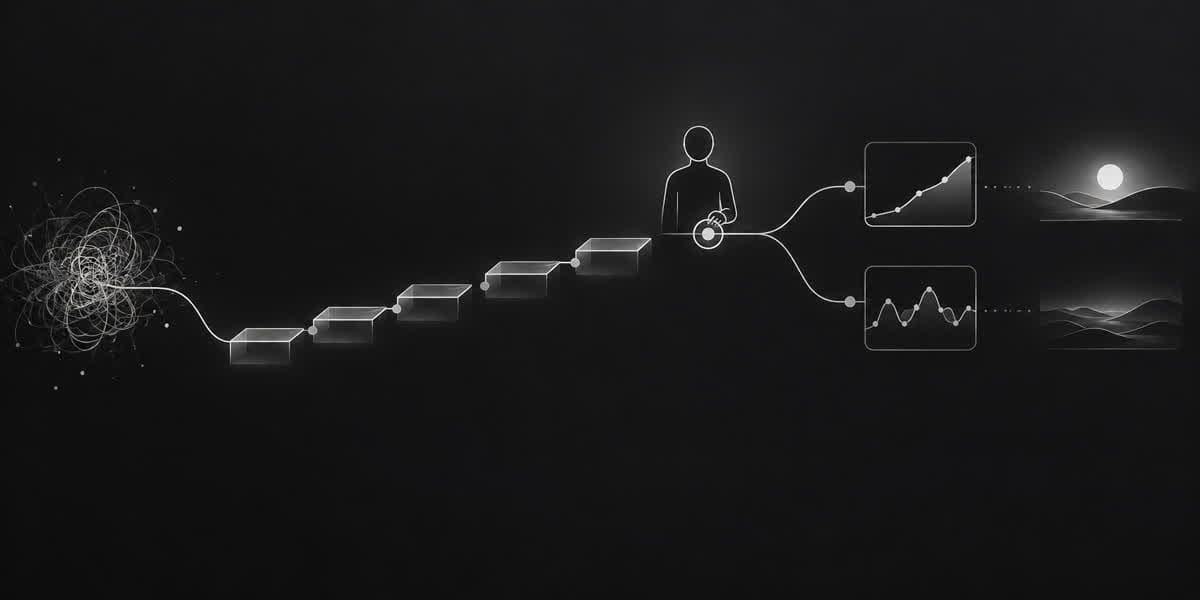
The next building-AI shift is not a smarter dashboard. It is the arrival of model-assisted triage inside the operator's control loop. Honeywell Technologies announced EBI One on November 10, adding AI Assist and Alarm Assist to a building-operations platform it says is used across more than 30,000 buildings. That is a meaningful workflow change for facility teams—but it is not evidence that buildings should run without accountable operators.
The practical question for owners, managers, and integrators is therefore narrower and more useful: can AI reduce the time spent finding and contextualizing an alarm while leaving the authority to act visible, reviewable, and reversible?
What changed in the real-estate workflow
Conventional building operations often force a technician to search across a building-management system, fire and life-safety panels, access control, video, work orders, and historical trends. The hard work is not merely detecting an event. It is reconstructing enough context to decide whether the event is urgent, related to another signal, or noise.
EBI One brings several of those steps into one operating environment. Honeywell describes Alarm Assist as machine-learning interpretation and classification for triage. AI Assist provides a natural-language interface to operational data and documentation, including events, alarms, and historical values. The company also describes an open integration framework and browser access intended to simplify deployment and use across large sites.
That moves AI from an after-the-fact analytics page toward the moment when a property operator prioritizes work. A hotel engineer, campus facilities team, data-center operator, or property manager may receive a ranked queue and a summarized explanation before deciding what to inspect, acknowledge, escalate, or leave untouched.
How the AI-assisted workflow works
A responsible implementation has four layers. First, connectors collect time-series values, alarm events, equipment metadata, documentation, and human-entered notes. Second, models classify or group signals and retrieve relevant context. Third, the interface presents a suggested priority, supporting evidence, and uncertainty. Fourth, a named operator decides whether to acknowledge, dispatch, change a setpoint, or invoke a safety procedure.
Honeywell's announcement also describes Forge Cognition as an AI and simulation layer that can help optimize control sequences and setpoints. That makes the human boundary especially important. A conversational answer about a historical temperature is a lower-risk action than a control change affecting occupant comfort, equipment, fire protection, or energy use. Permissioning, audit logs, rollback, and a clear separation between recommendation and actuation should be designed into the workflow.
The vendor's claims remain vendor claims. The release reports early-adopter gains and cites an NVIDIA headquarters co-creation deployment with an average 90% reduction in unnecessary alerts and a potential reduction of up to 10% in energy and utility consumption. Those figures are not a general building benchmark: the baselines, time window, site conditions, and counterfactual are not supplied in the announcement. Owners should treat them as hypotheses to test, not savings to underwrite.
Who benefits and what could break
Operators benefit when the system removes repetitive searching and makes the exception queue smaller and more intelligible. Building owners may gain better uptime and lower integration friction. Tenants may benefit from faster response to comfort or maintenance problems—if optimization does not quietly trade comfort, accessibility, or indoor-air quality for an aggregate energy target.
The failure modes are familiar but consequential. Alarm labels can encode local practices and historical bias. A model can miss rare failures, over-prioritize noisy equipment, or drift after a retrofit. Training and evaluation data may leak information about occupants, security events, or tenant behavior. A natural-language explanation can sound confident without proving causality. If a recommendation is acted on automatically, liability moves from an interface question to a life-safety and asset-protection question.
There is also an adoption constraint: an AI layer cannot repair missing points, inconsistent equipment names, weak network segmentation, or undocumented overrides. Integrators still need data lineage, cybersecurity controls, commissioning tests, and a plan for degraded operation when connectivity or the model is unavailable.
Practice lab
Exercise: Test whether AI-assisted alarm triage improves review quality on a closed, research-only replay of historical building events. Do not change live setpoints or use the exercise to make a property, safety, or financial decision.
Inputs and steps: Use a de-identified 30-day export of alarms, equipment metadata, operator dispositions, and work-order timestamps. Compare the existing queue with an AI-assisted queue that shows its priority, evidence, and uncertainty. Have the same qualified reviewers label urgency and related-event grouping under both conditions, with the order randomized.
Baseline, metrics, observation window, and stop condition: The baseline is the current queue and reviewer workflow. Measure time to first correct priority, missed high-severity events, false escalations, reviewer agreement, and the percentage of suggestions that cannot be traced to source data over four weeks. Stop if a high-severity miss increases, if reviewers cannot reconstruct why a suggestion appeared, or if privacy and access controls fail.
Builder and operator takeaway
- Buy an exception-management workflow, not an autonomy slogan: every suggestion needs evidence, ownership, and a reversible action path.
- Separate triage from control. Require stronger approval and logging for changes affecting life safety, equipment protection, or occupant conditions.
- Measure false escalations, missed events, drift, and reviewer burden alongside energy or response-time outcomes.
Links / sources
- Honeywell Technologies: EBI One — primary announcement of AI Assist, Alarm Assist, integrations, and early-adopter claims.
- Honeywell Technologies: building automation, safety, and security innovations — broader product context and disclosed deployment claims.
- Building AI needs an energy-control loop — related discussion of measurement and human overrides.
- AI maintenance triage can shorten turns — related discussion of routing versus diagnosis.