Browser Agents Are Becoming State-Management Products
Browser agents are no longer judged mainly by how well they click. The real product is state recovery, scoped memory, and clean handoff when the page changes underneath them.

Browser Agents Are Becoming State-Management Products
The important thing is not that browser agents can click around the web; it is that they now live or die by state management because the hard part is surviving page changes, authentication friction, and recovery when the workflow breaks.
That shift is visible in the latest wave of agent tooling. OpenAI’s recent Codex changelog says the product is still being tuned around browser tab restoration, project ordering, remote SSH, background agent handoff, and other reliability edges. The point is not that these are flashy features. It is that the vendor keeps having to solve the boring parts of continuity before the agent feels dependable. Separately, OpenAI’s recent write-up on agentic work argues that more user requests are already mapping to work that takes humans longer than 30 minutes, which is exactly the kind of task where persistence and handoff matter more than a single perfect action.
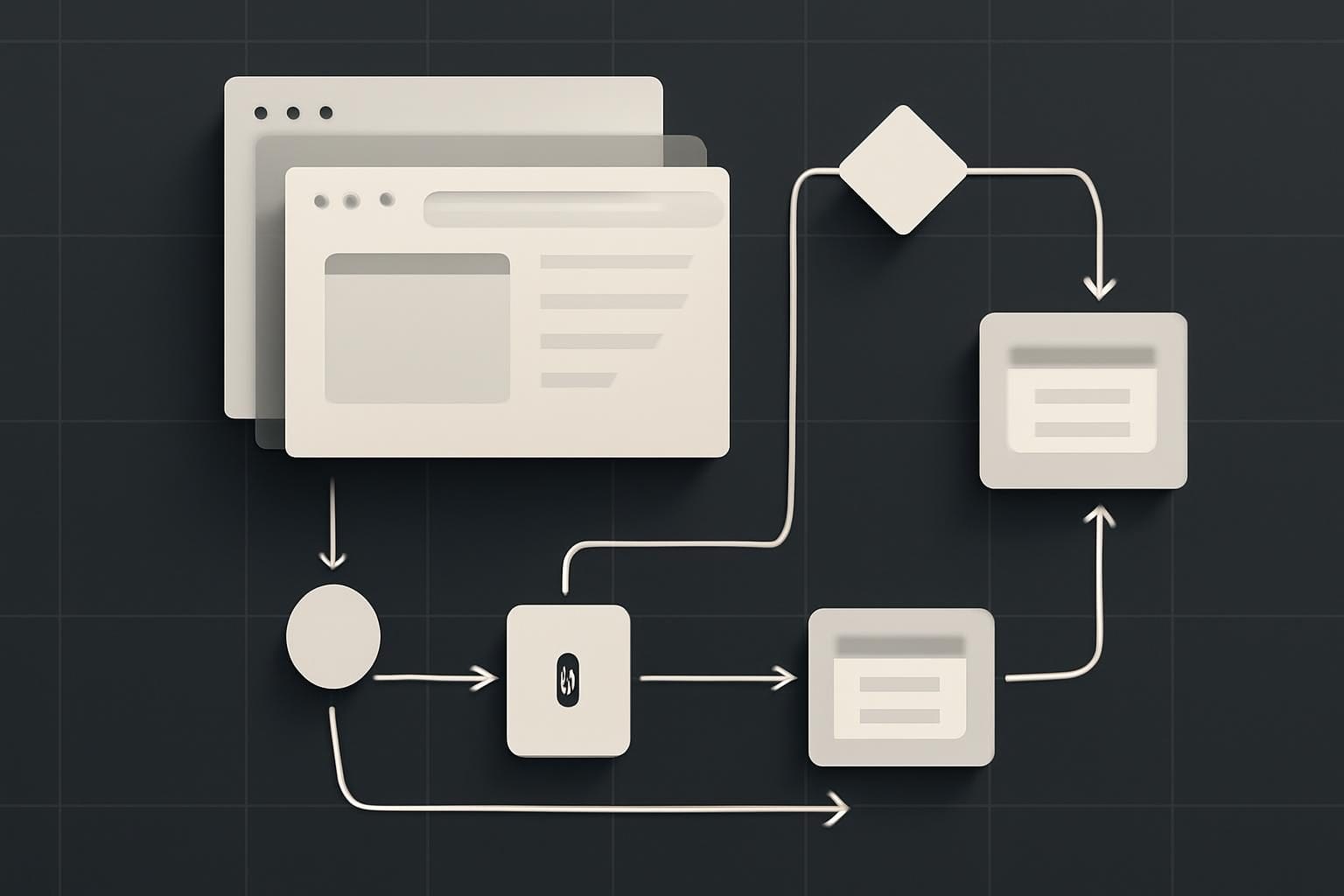
That matters because most people still describe browser agents as if they are just “LLMs that can use Chrome.” That framing is too small. A usable browser agent is closer to a state machine with a language model inside it. It needs to remember what page it was on, what login step was already cleared, what data was extracted, what failed, what can be retried safely, and what should be escalated to a human. If any of those pieces are weak, the demo looks clever and the workflow feels brittle.
This is why the real product competition is moving away from pure click success rate. A browser agent that succeeds 70 percent of the time on the first try but cannot resume cleanly is often worse than one that is slower but can checkpoint, recover, and hand off. In practice, the buyer is not paying for one action. The buyer is paying to reduce the amount of human attention needed to finish the task end to end.
The mechanism here is easy to miss. Browser work is hostile to one-shot intelligence because the environment changes under the agent. Sessions expire. Pop-ups interrupt. DOMs shift. Captchas appear. Tabs drift. Permissions differ by account. The agent does not just need reasoning; it needs a continuity layer that treats the browser like an unreliable operating environment. That means scoped memory, action logs, retry rules, artifact capture, and explicit recovery paths.
You can see the same logic in adjacent tooling discussions. The “agentic” layer is becoming less about deciding what to do and more about preserving enough context to continue doing it after interruption. That is a design problem, not just a model problem. It also explains why browser automation products often end up looking like workflow platforms with model assistance rather than pure AI chat interfaces.
There is a second-order consequence for teams building on top of this stack. If browser agents are state-management products, then the product surface shifts toward observability and guardrails: where the agent is allowed to store state, when it should checkpoint, which actions are safe to retry, what evidence is attached to each step, and when a human must take over. Those controls are not compliance garnish. They are the difference between a helpful system and a system that silently corrupts work.
That also changes what “better model” means. Better models still help with planning and recovery judgment, but the marginal win increasingly comes from infrastructure around the model: session persistence, browser tab restoration, tool-call logs, per-account memory, and clean execution replay. In other words, the moat is not only reasoning quality. It is the operational surface that lets reasoning survive the web.
The practical implication for builders is simple: instrument the browser state boundary before you optimize prompt quality. Track session loss, auth failure, replayability, and time-to-recovery. Ask whether the agent can resume from a checkpoint without repeating sensitive or irreversible actions. If you cannot answer that, you do not yet have a browser agent product. You have a fragile demo.
That is also the right way to read the current product cadence around agents. The frontier is not just “can it do the task?” It is “can it continue the task after the web has made it messy?”
For a related angle on how AI products are moving into permissioned collaboration surfaces, see Slack Is Becoming the AI Permission Layer.
The Chinese companion is here: 浏览器智能体正在变成状态管理产品.