AI Voice Agents: Natural Conversation vs. Operational Handoff Reality

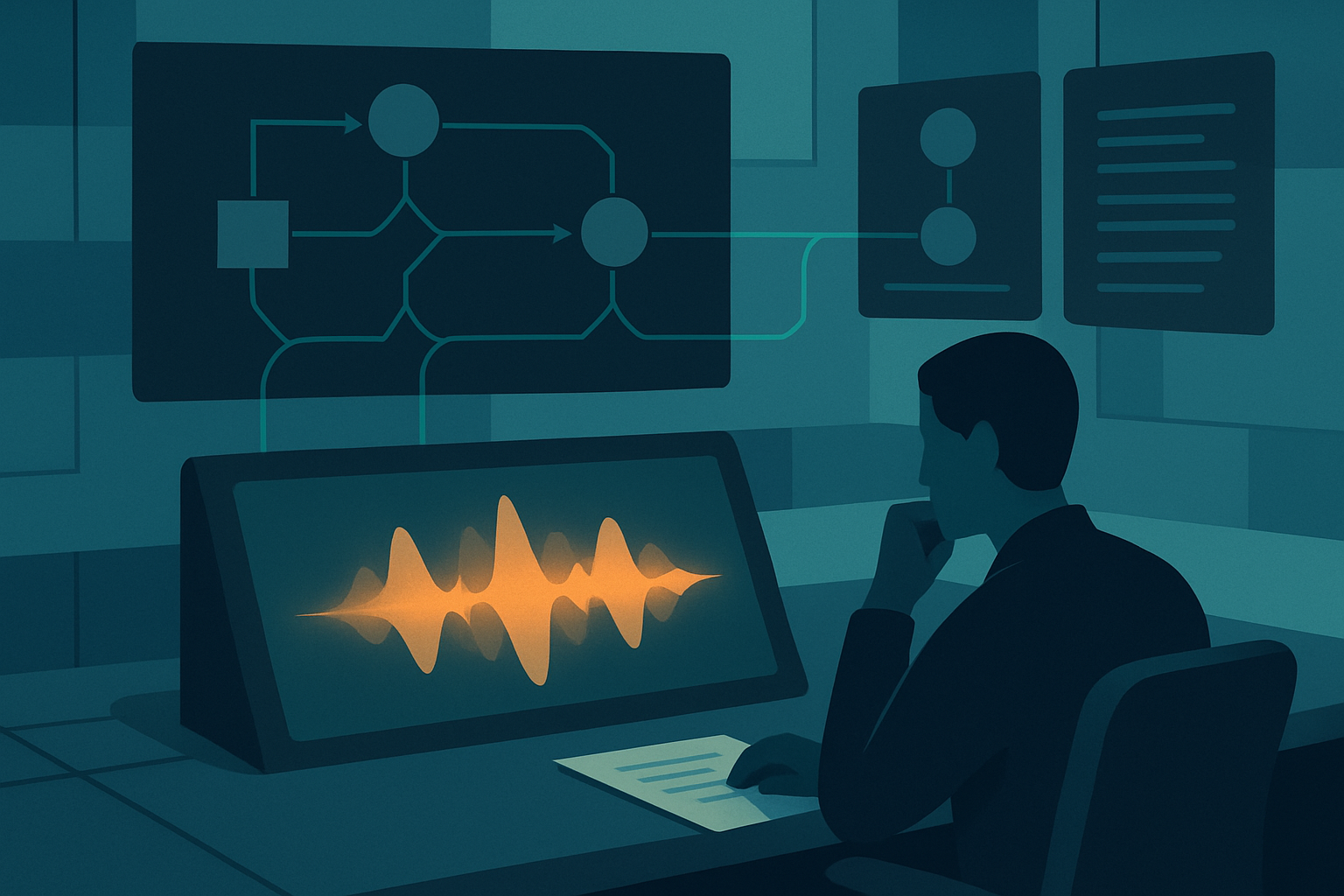
The signal: AI voice agents are moving from novelty demos into real customer operations. The leap is easy to understand. Speech recognition has improved. Large language models can handle open-ended conversation better than rigid phone trees. Text-to-speech systems sound less robotic. Real-time model APIs are reducing latency enough that a caller no longer has to wait awkwardly after every sentence. For companies facing high support volume, staffing pressure, and expensive call centers, the promise is attractive: an AI agent that can answer routine questions, collect information, schedule appointments, qualify leads, follow up with customers, and escalate only when needed.
The demos are persuasive because voice feels more human than chat. A smooth AI receptionist can greet a caller, understand the issue, ask clarifying questions, and summarize the request for a human team. A healthcare clinic can imagine automated reminders and intake calls. A local service business can imagine after-hours booking. A bank can imagine faster routing. An enterprise support team can imagine replacing layers of IVR menus with a conversational front door. The headline signal is not merely “AI can talk.” It is that voice may become a primary interface for operational workflows that have been stuck in phone queues and forms.
This matters because voice touches moments where friction is costly. A customer who calls usually wants something resolved now. If an AI voice agent can identify intent, authenticate safely, gather the right details, and route the case cleanly, it can reduce wait times and improve service quality. For internal operations, voice can also capture field updates, meeting notes, maintenance reports, and incident status without forcing workers into yet another dashboard. In theory, conversational voice makes software available wherever hands and screens are inconvenient.
There is also a distribution advantage. Many organizations already have phone numbers, call recordings, scripts, CRM fields, scheduling systems, and escalation processes. That makes voice agents easier to imagine than a brand-new AI product category. The AI can be inserted into an existing channel. If it works, it saves money quickly. If it fails, the failure is visible quickly. That is why voice agents are likely to see more serious experimentation than many flashier AI interfaces.
The reality check: Natural conversation is not the same as operational reliability.
The first issue is handoff design. A human-sounding agent creates expectations. If it reaches the edge of its authority but cannot transfer the caller with context, the experience becomes worse than an old phone tree. The caller has already explained the problem, waited through a conversation, and now has to repeat everything. Production voice agents need explicit escalation rules, warm transfers, concise summaries, and clear ownership after the handoff. “A human will follow up” is not a workflow unless the system creates the task, attaches the transcript, sets the priority, and confirms who owns it.
The second issue is consent and disclosure. Voice interactions are sensitive because they can feel intimate and because recordings may contain personal information. Customers should know when they are speaking with an AI, when a call is recorded, and how their data will be used. In regulated contexts, disclosure is not only a trust issue; it may be a legal and compliance issue. Teams that hide automation to make the demo feel magical are building risk into the product.
The third issue is latency under real conditions. A voice demo usually happens in a quiet room with a cooperative user. Real calls include accents, background noise, interruptions, emotional customers, speakerphone audio, weak mobile connections, and people who change topics mid-sentence. Small delays that are tolerable in chat feel strange in speech. The agent must know when to pause, when to interrupt politely, when to ask for repetition, and when silence means the caller is thinking rather than gone.
The fourth issue is authority boundaries. Voice agents often sit close to decisions: refunds, appointments, account access, medical intake, financial questions, technical troubleshooting, cancellations, and complaints. A confident voice can make an uncertain answer sound official. Teams need strict policies for what the agent may do, what it may only explain, what it must refuse, and what requires human approval. The voice layer should not make a weak policy seem stronger than it is.
The fifth issue is observability. Chat systems leave text logs by default. Voice systems need transcript quality checks, audio metadata, interruption markers, sentiment signals, escalation reasons, and post-call outcomes. Without instrumentation, teams will not know whether the AI solved the problem, confused the caller, dropped important context, or simply deflected work to humans in a more expensive way.
A practical rollout starts with bounded tasks. Appointment confirmation, status checks, simple intake, reminder calls, and call summarization are safer than broad customer service replacement. Measure containment honestly: not just how many calls the AI handled, but how many were resolved correctly without repeat contact. Review transcripts. Track escalation quality. Test edge cases with real noise and real customer phrasing. Make the AI identify itself. Keep humans close to high-stakes decisions. Most importantly, design the handoff before scaling the conversation.
Key points to remember:
- Voice raises expectations - A natural voice makes poor escalation feel more frustrating, not less.
- Handoffs are the product - Transfers, summaries, task creation, and ownership determine whether the workflow works.
- Disclosure matters - Callers should know when they are interacting with AI and how recordings or transcripts are used.
- Real calls are messy - Noise, accents, interruptions, latency, and emotion break polished demos.
- Boundaries must be explicit - Voice agents need clear rules for authority, refusal, approval, and escalation.
The bottom line: The signal is that AI voice agents are becoming good enough to enter serious operational workflows. The reality check is that success will not come from sounding human. It will come from reliable handoffs, clear consent, careful boundaries, and measurement that proves the caller’s problem was actually resolved.