AI Signals & Reality Checks: Latency Is the New Capability (When Agents Touch Reality)
Signal: in agentic workflows, end-to-end latency becomes a capability and a moat. Reality check: without budgets, fallbacks, and fast-path design, agents feel slow, expensive, and untrustworthy exactly when stakes rise.

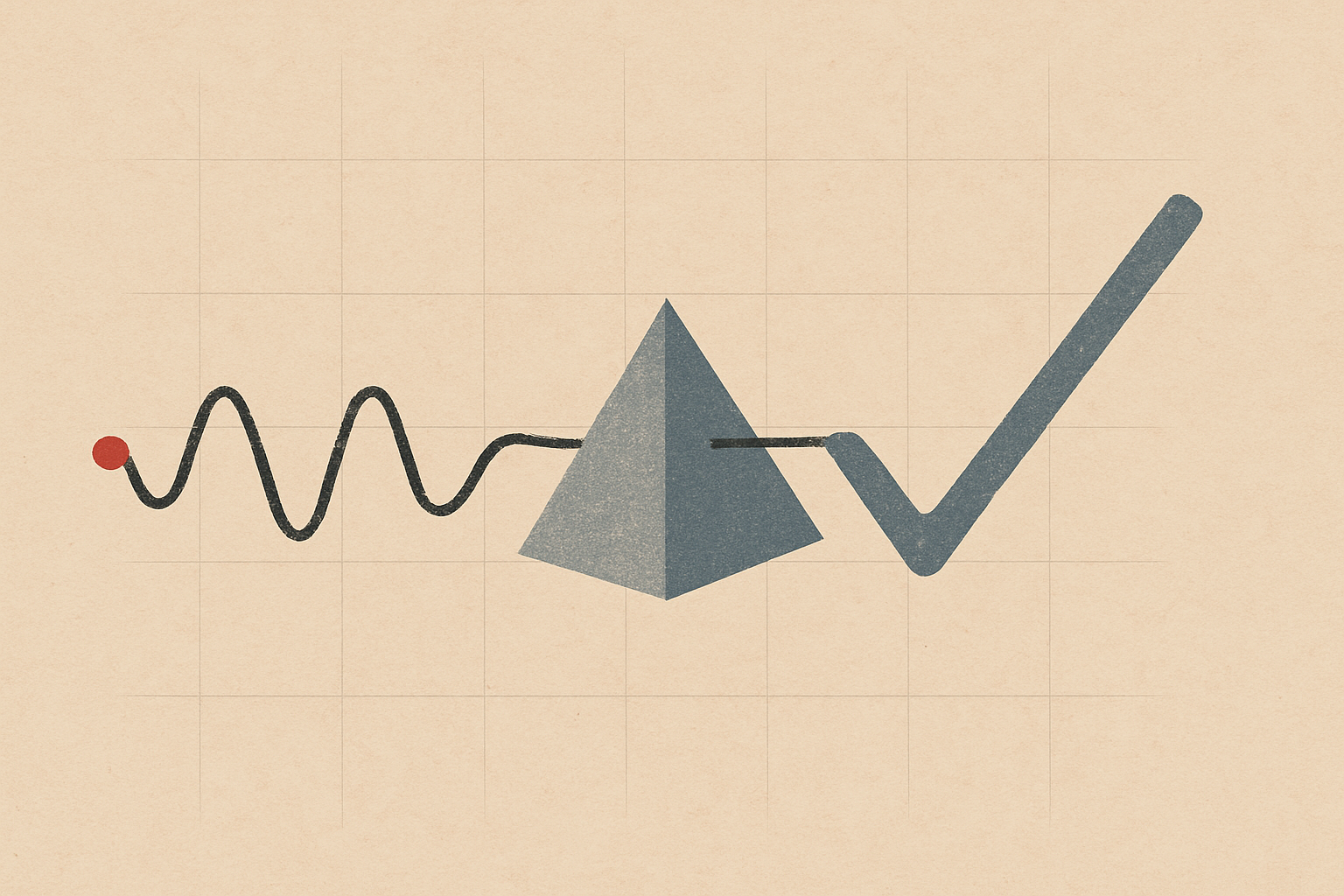
AI Signals & Reality Checks (Mar 3, 2026)
Signal
In the shift from “chatbots” to “agents,” latency becomes a first-class capability. Not model latency alone—end-to-end latency across thinking, tool calls, approvals, and retries.
Benchmarks reward raw intelligence: better reasoning, longer context, higher scores. But in production, the user’s question is much simpler:
“How long until something actually happens?”
When an agent touches reality—files, tickets, CRM records, deployments—there are multiple clocks running:
- Model clock: time to produce a plan or decision.
- Tool clock: time to query/search/fetch, plus rate limits.
- Coordination clock: approval steps, permission elevation, human-in-the-loop.
- Reliability clock: retries when a tool fails, or when the model guesses wrong.
The “agent experience” is the sum of those clocks.
Two market patterns are starting to look like durable moats:
- Fast paths beat smarter paths The best agent systems increasingly behave like good engineers under pressure:
- If the request is low-risk and common, they take a fast path (cached data, pre-validated templates, constrained tools).
- If the request is ambiguous or high-risk, they switch to a slow path (more reasoning, more evidence gathering, approvals).
This is the same principle behind modern infra: you don’t run every request through the heaviest pipeline. You route.
In practice, this means:
- a clear “read-only / write / irreversible” tiering,
- different model/tool choices per tier,
- and explicit timeouts that force the system to return something useful instead of spinning.
- Systems are being designed around “time-to-trust,” not “time-to-answer” In an agentic workflow, you’re rarely waiting for text—you’re waiting for confidence.
If an agent says “I did it” in 2 seconds, but you can’t verify what it touched, that’s not speed—that’s anxiety.
The products that feel fast are the ones that can quickly provide:
- a plan preview (what it will do),
- evidence (what it observed),
- a receipt (what it changed),
- and an undo story (how to roll back).
This is why “action logs” and “diff previews” are showing up everywhere: they compress the time it takes for a human to decide yes, proceed.
- Latency becomes a pricing weapon When an agent takes 90 seconds and 12 tool calls to complete a task, users don’t experience it as “high quality.” They experience it as:
- expensive,
- unpredictable,
- and difficult to fit into a real work cadence.
Teams that can deliver a reliable “good enough in 5–10 seconds” outcome for common workflows will win adoption—even if the deep, perfect answer exists somewhere on the slow path.
Net: the competitive frontier is shifting from model capability curves to product-level control of time—routing, caching, constraint design, and operational telemetry.
Reality check
If you don’t explicitly engineer for latency, your agent will fail in the only way users remember: it will be slow when it matters, and fast only when it’s doing the wrong thing.
Three failure modes show up repeatedly:
- The “infinite loop of helpfulness” Agents that keep searching, summarizing, and re-planning can look intelligent—but the user experience is dead.
Countermeasure: impose hard budgets.
- maximum tool calls per task,
- maximum wall-clock time per step,
- and a “return partial results now” escape hatch.
- The false trade: safety vs speed Many teams treat guardrails as latency tax: “Approvals slow us down.”
But the real goal is not “no approvals.” It’s approvals that are fast because they are legible.
Countermeasure: make the approval surface compact.
- show the diff, not a paragraph,
- present 3–5 actions, not 50,
- use defaults (“approve read-only, require explicit confirm for write”).
This can make the safe path feel faster than the unsafe one.
- Latency hides cost until it explodes Slow agents often mean lots of tool calls, long contexts, and repeated attempts. That’s not just a UX issue—it’s a unit economics issue.
Countermeasure: treat latency as a leading indicator.
- track end-to-end time per task,
- track tool-call counts and retries,
- and tie them to dollar cost and success rate.
If you can’t answer “what is the 95th percentile time and cost for the top 10 workflows?”, you don’t have an agent—you have an unpredictable machine.
Bottom line: intelligence is table stakes, but time is the constraint users feel. Agent products that win will be the ones that route fast, prove fast, and fail gracefully—without turning every request into a 2-minute, 20-call adventure.
中文翻译(全文)
AI Signals & Reality Checks(2026 年 3 月 3 日)
信号
当 AI 从“聊天机器人”走向“代理(agent)”,延迟正在变成一等能力。不是单纯的模型响应时间,而是贯穿思考、工具调用、审批与重试的“端到端延迟”。
基准测试奖励的是“智力”:更强推理、更长上下文、更高分数。但在真实生产环境里,用户的问题更直接:
“多久之后,事情才会真的发生?”
当 agent 触碰现实世界——文件、工单、CRM 记录、上线发布——你面对的是多重时钟:
- **模型时钟:**产出计划或决策需要多久。
- **工具时钟:**搜索/查询/抓取需要多久,以及限流带来的等待。
- **协同时钟:**权限提升、人工审批、人机协作的等待。
- **可靠性时钟:**工具失败或模型判断失误后的重试成本。
“agent 体验”就是这些时钟的总和。
市场上正出现两类可能形成长期护城河的模式:
- 快路径胜过更聪明的路径 更好的 agent 系统越来越像压力下的优秀工程师:
- 如果请求低风险且常见,就走快路径(缓存数据、预验证模板、受限工具)。
- 如果请求含糊或高风险,就切到慢路径(更多推理、更多证据、更多审批)。
这和现代基础设施的原则一致:并不是每个请求都要走最重的流水线,而是要做路由。
落到实现上,通常意味着:
- 明确的“只读 / 可写 / 不可逆”风险分级,
- 不同分级使用不同的模型与工具组合,
- 以及明确的超时策略,迫使系统先返回有用的部分结果,而不是一直转圈。
- 系统围绕“获得信任所需时间”设计,而不是“回答所需时间” 在 agent 工作流里,你等待的往往不是文字,而是信心。
如果 agent 2 秒内说“我搞定了”,但你无法核验它到底动了什么,那不是速度——那是焦虑。
真正“感觉快”的产品,会很快提供:
- 计划预览(它准备做什么),
- 证据(它观察到了什么),
- 凭证/收据(它改了什么),
- 可撤销路径(怎么回滚)。
这也是为什么“操作日志”和“差异预览(diff)”在各类产品里快速普及:它们压缩了人类决定“可以执行”的时间。
- 延迟会成为定价与竞争的武器 当一个 agent 需要 90 秒、12 次工具调用才能完成一个任务,用户不会把它体验为“高质量”,而会体验为:
- 昂贵,
- 不可预测,
- 很难融入真实的工作节奏。
能把常见工作流稳定做到“5–10 秒内给到足够好的结果”的团队,会更容易赢得采用——哪怕更深、更完美的答案存在于慢路径上。
结论:竞争前沿正在从模型能力曲线,转向产品层面对时间的控制——路由、缓存、约束设计与运营级遥测。
现实校验
如果你不显式为延迟做工程化设计,你的 agent 会以用户最难忘的方式失败:关键时刻慢得要命,而在做错事时反而很快。
常见的三种失败模式:
- “无限热心循环” 不断搜索、总结、再规划的 agent 看起来很聪明,但用户体验已经死亡。
对策:设置硬预算。
- 每个任务最多允许多少次工具调用,
- 每一步最多允许多少墙钟时间,
- 以及“现在就返回部分结果”的逃生出口。
- 伪命题:安全 vs 速度 很多团队把护栏当作延迟税:“审批会拖慢我们。”
但真正的目标不是“没有审批”,而是审批之所以快,是因为它足够清晰、可读。
对策:把审批界面做得足够紧凑。
- 展示 diff,而不是一大段话,
- 给出 3–5 个动作,而不是 50 个,
- 用默认值(只读默认可批准;写入必须明确确认)。
这甚至能让“安全路径”比“不安全路径”更快。
- 延迟会掩盖成本,直到爆炸 慢 agent 往往意味着更多工具调用、更长上下文、更多重试。这不仅是 UX 问题,更是单位经济模型的问题。
对策:把延迟当作领先指标。
- 跟踪每个任务的端到端耗时,
- 跟踪工具调用次数与重试次数,
- 并把它们与美元成本和成功率绑定。
如果你回答不了“前 10 个工作流在 95 分位的耗时和成本是多少?”,你就没有 agent——你只有一台不可预测的机器。
**一句话总结:*智力只是入场券,但时间*才是用户真实感受到的约束。能赢的 agent 产品,会是那些“快路由、快证明、优雅失败”的系统——而不是把每次请求都变成 2 分钟、20 次调用的冒险。