AI Mental Health Frontier — The Users at Highest Risk Are Already Turning to AI
A new college-student study finds that severe symptoms predict mental-health AI use. The product lesson is to design for escalation, not just engagement.

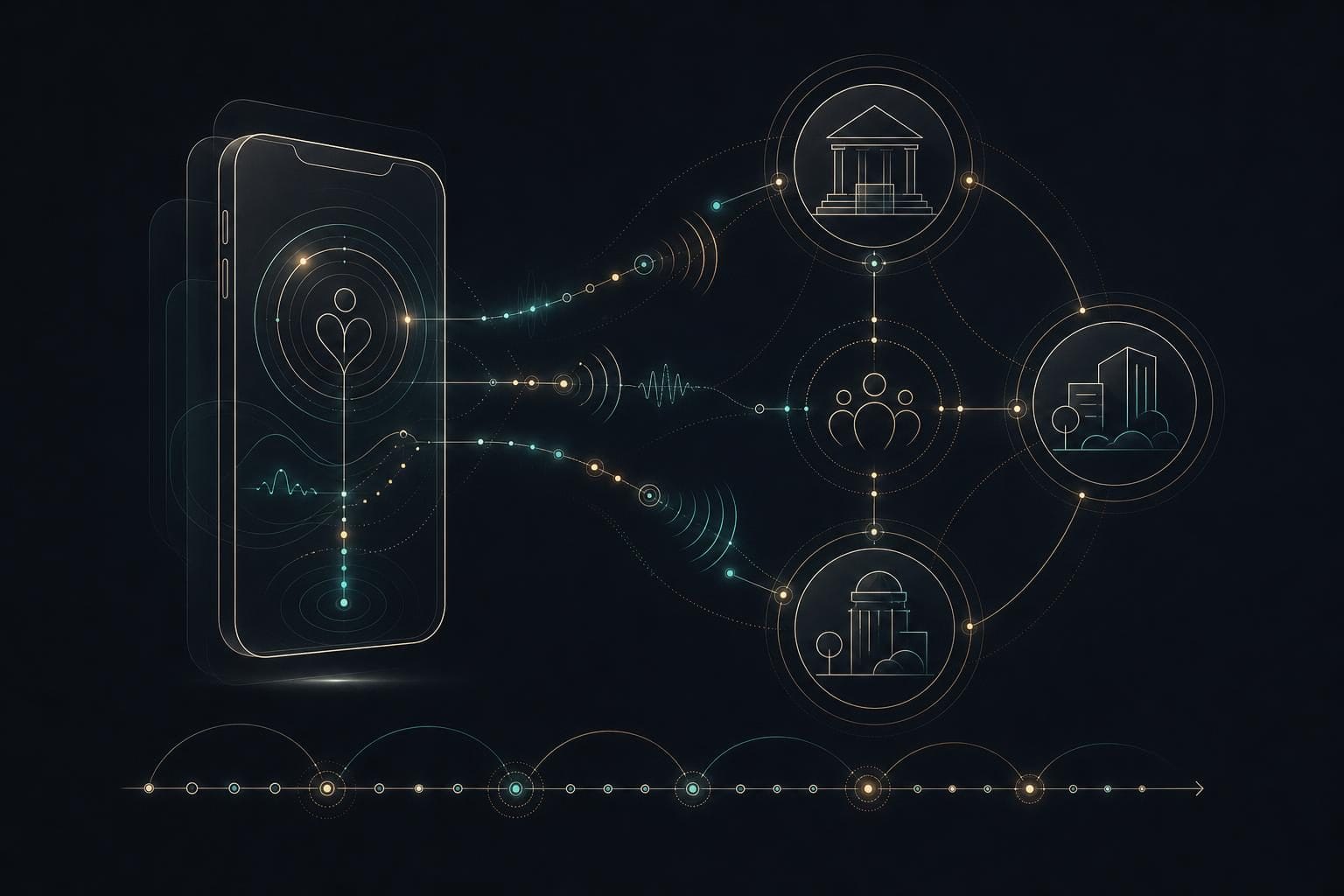
Approximately 18% of students in a new study reported using AI for mental-health support, and the students most likely to do so were not a random slice of the campus. Depression, severe anxiety, suicidality, and prior therapy were associated with use. For builders, the signal is immediate: the people entering an unregulated conversational system may include those least able to absorb a confident mistake. AI mental-health products should therefore be designed around risk-aware routing and accountable handoffs, not merely longer conversations or higher satisfaction scores.
The frontier signal
Liu and colleagues analyzed the 2024–2025 Healthy Minds Study module from two U.S. institutions. Of 896 students who completed the AI module, 675 had complete data. About 18% reported using AI for mental health. Frequent general AI use was the strongest predictor of mental-health use, with reported odds ratios between 11.42 and 12.87. Moderate depression, severe depression, severe anxiety, suicidality, and lifetime therapy were also associated with use. Asian students showed elevated odds in the reported models.
This is a cross-sectional study, not a safety or efficacy trial. It cannot tell us whether AI helped, harmed, or substituted for care. Its value is different: it identifies who may arrive at the system and why a generic “wellness user” assumption is unsafe. The sample came from only two institutions, and prevalence may change quickly as adoption changes.
Why clinicians and builders care
The product funnel often begins with a low-friction promise: ask a question, describe a feeling, receive an immediate response. But a system that attracts people with severe symptoms is functionally closer to a front door for care than to a neutral productivity tool. That changes the design burden.
The first requirement is not to diagnose students. It is to recognize when the interaction has crossed a workflow boundary: urgent distress, possible suicidality, severe functional impairment, or a request that should move to a qualified human. A safe system needs a visible and usable next step, region-appropriate resources, and a handoff that does not depend on the user repeating their story from scratch.
The finding also complicates “engagement” as a north-star metric. A highly engaging assistant may be succeeding at retaining users who need care elsewhere. NAMI’s October 2026 policy position makes the boundary explicit: general-purpose chatbots should not replace licensed providers, diagnosis, treatment planning, or crisis support, and evaluation should include people with lived experience.
Technical read-through
The study uses descriptive comparisons and hierarchical logistic regression, with a supplementary multinomial model for three groups: never using AI, using AI but not for mental health, and using AI for mental health. The authors note that general AI use could not be included as a predictor in the primary three-group structure because of structural confounding.
That detail matters for product analytics. “Used the assistant” is not a sufficient exposure variable. A builder should distinguish general use, mental-health intent, symptom severity, repeat use, and whether a human-care connection followed. The model’s associations are not a production risk score. They are a reason to collect better, consented signals and validate any routing logic prospectively.
There is a second technical implication. A recent clinical commentary describes a possible engagement-validation loop: sycophancy and anthropomorphic projection can reinforce maladaptive beliefs. That hypothesis should be tested with adversarial scenarios and clinician review, not treated as a benchmark that has already established causal harm.
Clinical reality check
The paper does not establish that AI caused worsening symptoms or that students abandoned therapy. It also does not establish that AI is ineffective. Self-reported use, two-campus sampling, cross-sectional data, and rapidly shifting adoption limit what can be inferred.
Still, the risk asymmetry is real. A student with severe symptoms may disclose more than a product expects, interpret warmth as clinical authority, or mistake a conversational response for a safety assessment. Privacy is another boundary: users may not understand that chatbot conversations do not carry the same confidentiality protections as licensed care.
The practical answer is not to block every low-risk informational interaction. It is to make the system’s role legible, test crisis and high-acuity pathways, measure false reassurance and missed escalation, and involve people with lived experience in evaluation. Read alongside the earlier workflow analysis of Therabot and the case for checkable mental-health guardrails, today’s study shifts the question from “who likes the chatbot?” to “who is relying on it when the stakes are high?”
Builder takeaway
- Segment evaluation by intent and severity; never let aggregate satisfaction hide high-acuity failures.
- Make disclosure, scope, privacy, and escalation options visible before and during sensitive conversations.
- Test handoffs: preserve context with consent, route to an appropriate human or service, and verify completion.
- Track missed escalation, false reassurance, over-triage, repeat crisis disclosures, and abandonment—not only engagement.
- Recruit students, marginalized groups, and people with lived experience into scenario design and safety review.
Links / sources
- Liu et al., Clinical and sociodemographic predictors of AI use for mental health among college students — Journal of Affective Disorders, 2026; cross-sectional Healthy Minds Study analysis.
- Santos et al., The engagement-validation loop — Journal of Affective Disorders, 2026; conceptual clinical-risk analysis.
- NAMI: AI Chatbots and Mental Health — policy position approved October 17, 2026.