AI Mental Health Frontier - Therabot Needs Workflow Proof
Therabot's first randomized trial is promising, but the real frontier is whether AI-assisted therapy can prove safety inside clinical workflows.

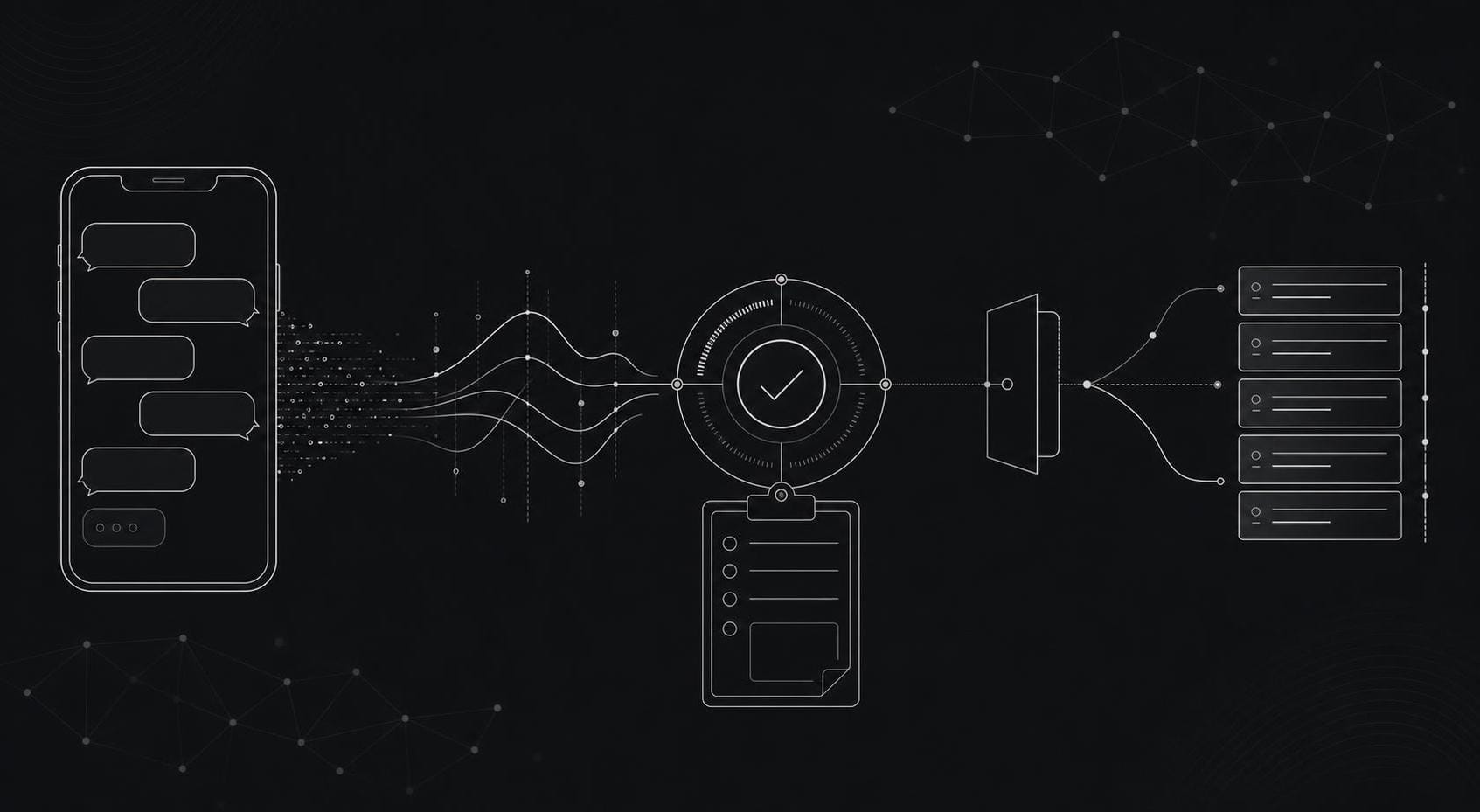
Dartmouth's Therabot work is becoming the reference case for a harder question in AI mental health: not whether a chatbot can sound supportive, but whether an AI-assisted therapy system can survive a clinical workflow test. A July 2026 Geisel School of Medicine update notes that Nicholas Jacobson was recognized for leading the first randomized clinical trial of a generative AI therapy chatbot, with the original results published in NEJM AI in 2025.
For builders, the signal is not "AI therapist replaces care." That is the wrong frame. The useful frame is narrower and more operational: a clinically designed conversational system may help some users between scarce human appointments, but only if the product has measurement, escalation, oversight, and boundary conditions built before scale arrives.
That makes Therabot worth watching alongside broader work on generative AI in mental health and mental-health product strategy. It also fits the larger agentic systems question covered in frontier AI surveys: autonomy is only valuable when the surrounding control loop is strong enough to absorb mistakes.
The frontier signal
Geisel's July 2026 note says Jacobson was named a finalist for the Chen Institute and Science Prize for AI Accelerated Research because of the Therabot trial and the broader significance of carefully developed AI-assisted therapy. The update is not a new clinical trial result, but it matters because it shows where the conversation is moving: from impressive demos toward evidence, regulation, and clinician-supervised deployment.
The original randomized trial enrolled 210 participants who had major depressive disorder, generalized anxiety disorder, or clinically high risk for feeding and eating disorders. According to Dartmouth's summary, 106 participants were assigned to use Therabot for four weeks through a smartphone app, while 104 were in a no-access control group. Dartmouth reports average symptom reductions of 51% for depression, 31% for anxiety, and 19% for eating-disorder concerns among Therabot users.
Those numbers should be treated carefully. They come from a specific research context, not from a general-purpose chatbot released into the open internet. They do not establish that any conversational model can safely provide therapy. They do show that a purpose-built, clinically grounded system can produce enough signal to deserve serious workflow engineering.
Why clinicians and builders care
The immediate bottleneck in mental health care is not only model quality. It is service design. Many people need support before they can get an appointment, between sessions, after discharge, or during periods when symptoms fluctuate but no clinician is watching in real time. A conversational tool can be useful in that gap only if it is part of a care pathway rather than a lonely app.
The affected workflow spans intake, measurement-based care, stepped care, crisis escalation, documentation, and follow-up. A product team has to decide what the system is allowed to do, what it must never do, when a human must enter the loop, and how the organization proves those choices worked. A clinical operator has to decide who monitors risk queues, how alerts are routed, how documentation is reviewed, and whether the workflow adds more burden than relief.
That is why the Dartmouth quote about clinician oversight is the central line. Jacobson says there is no replacement for in-person care, while also arguing that carefully built and carefully tested AI can reach people outside the in-person system. The gap between those two claims is the design space.
Technical read-through
Therabot, as described by Dartmouth, is a generative AI platform developed since 2019 and grounded in evidence-based psychotherapy and cognitive behavioral therapy practices. Users could respond to prompts or initiate conversations, and the platform replied through natural, open-ended dialog.
The technical lesson is not simply "fine-tune a model on therapy content." A safer architecture would need several layers around the conversational model: a session-state model for longitudinal context, symptom and functioning measures that are tracked separately from free text, a risk-classification layer with conservative escalation thresholds, retrieval or policy constraints for evidence-based interventions, and audit logs that let clinicians understand why a safety decision was made.
Evaluation also has to be broader than user ratings. A mental-health AI system needs clinical outcome measures, engagement measures, adverse-event monitoring, crisis escalation review, subgroup analysis, and clinician burden measurement. A system that improves average symptom scores but misses high-risk moments, or creates an unmanageable alert queue, is not production-ready.
For Kaizhi's builder lens, the interesting product primitive is not a chatbot. It is a measured care loop: observe, respond, measure, escalate, review, and adjust. The conversational interface is only the visible surface.
Clinical reality check
The strongest caution is that mental-health conversations can move into crisis, psychosis, trauma, eating-disorder risk, medication questions, domestic violence, or self-harm. A generic assistant can become dangerous if it over-validates, misses context, gives confident advice outside scope, or keeps a distressed user inside an automated loop when human help is required.
There is also a cultural and relational problem. Therapy depends on timing, rupture and repair, nonverbal context, trust, and the clinician's ability to notice what the patient avoids saying. A text-only system can simulate warmth while missing the harder work of care. That does not make AI useless, but it should keep the deployment target humble.
The evidence boundary matters too. A four-week randomized trial in a research setting is a meaningful start; it is not proof of durable real-world safety across clinics, languages, age groups, comorbidities, and reimbursement models. Every production deployment needs post-market monitoring, safety review, and a plan for drift when the user population changes.
Builder takeaway
- Treat "AI therapy" as a supervised care workflow, not as a standalone conversation product.
- Separate outcome tracking from chat logs: symptoms, functioning, engagement, escalation events, and adverse signals should be measurable without relying on vibes.
- Design the human escalation path before launching the model: who is alerted, how fast, with what context, and with what fallback if no one responds.
- Test burden directly. False positives are not harmless if they drown clinicians; false negatives are not acceptable if they hide risk.
- Build language, culture, and high-sensitivity conditions as explicit evaluation slices, not as post-launch edge cases.
Links / sources
- Dartmouth Geisel School of Medicine - July 2026 recognition of Nicholas Jacobson's Therabot work and clinician-oversight framing: https://geiselmed.dartmouth.edu/news/2026/nicholas-jacobson-recognized-for-foundational-therabot-trial/
- NEJM AI - Randomized trial of a generative AI chatbot for mental health treatment: https://ai.nejm.org/doi/full/10.1056/AIoa2400802
- The Conversation - Recent overview of AI therapy chatbot benefits, trade-offs, and open questions: https://theconversation.com/the-ai-therapist-will-see-you-now-can-chatbots-really-improve-mental-health-259360