AI Incident Response: Faster Triage vs. Evidence Discipline

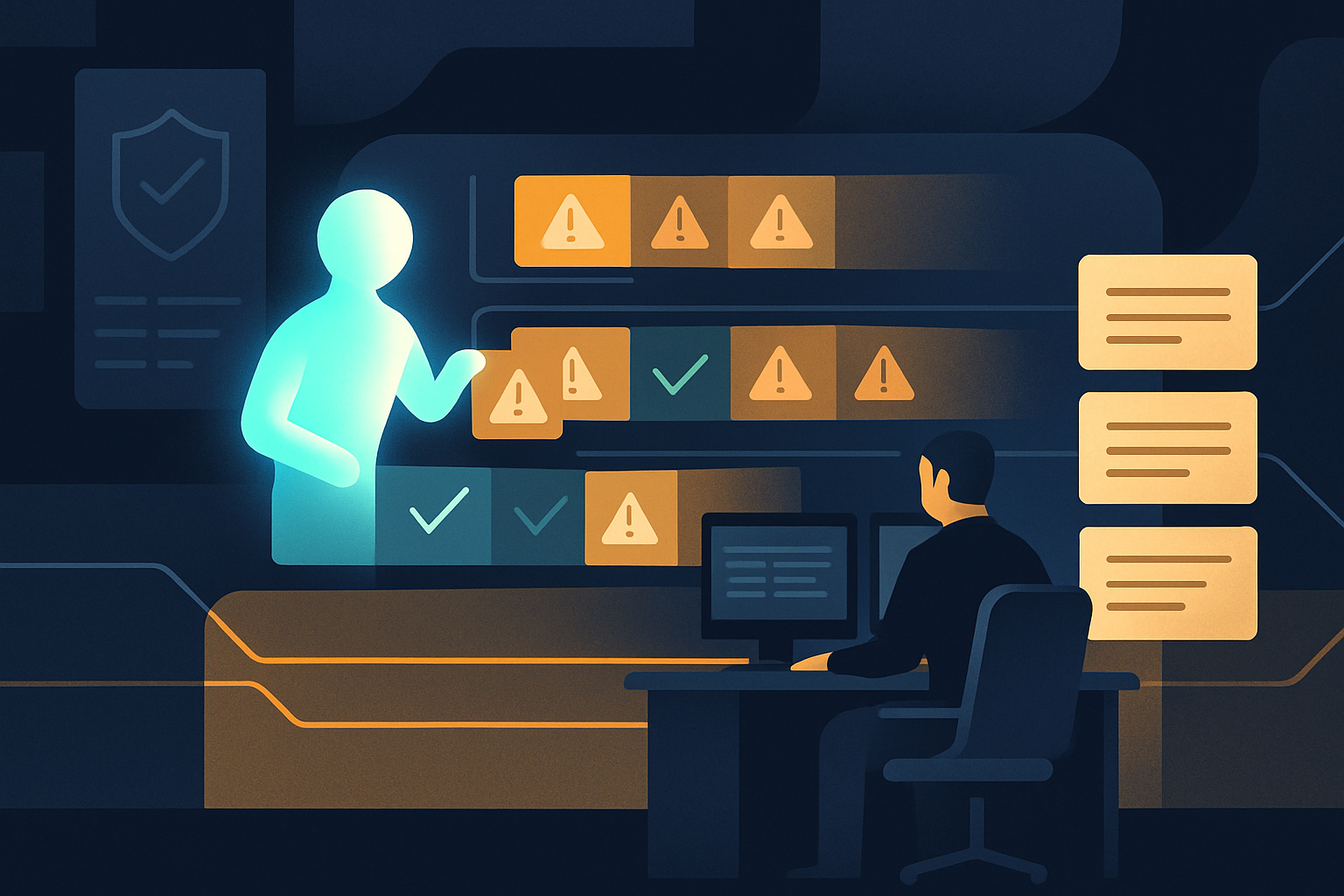
The signal: AI is moving deeper into incident response. Security teams are no longer using models only to summarize long reports or draft detection rules. They are experimenting with AI systems that can cluster alerts, explain suspicious behavior, search logs, suggest containment steps, generate tickets, brief executives, and even coordinate actions across security, IT, legal, and operations teams.
The attraction is obvious. Incident response is a race against time and attention. Analysts face too many signals, too many dashboards, too many noisy alerts, and too much pressure to decide quickly whether something is a false positive, a contained event, or the beginning of a serious breach. AI promises to compress the first hour: read the telemetry, connect weak signals, reconstruct a timeline, propose likely causes, and point humans toward the most urgent next move.
This is a real improvement path. Many incidents are slowed not by a lack of tools but by fragmented context. Endpoint data sits in one console, identity events in another, cloud logs somewhere else, SaaS audit trails behind separate permissions, and business impact knowledge in the heads of local teams. A well-designed AI assistant can act as a connective layer. It can translate between technical evidence and operational meaning: which accounts were involved, which systems matter, which data might be exposed, which customers or processes could be affected, and which containment options carry business risk.
AI can also reduce communication drag. During an active incident, teams need status updates, executive summaries, customer-impact drafts, regulator-facing timelines, and internal handoff notes. These artifacts are necessary, but they consume time from the same people who are trying to investigate. A model that turns verified evidence into structured updates can help responders communicate without constantly rewriting the same facts for different audiences.
There is also a staffing signal. Many organizations cannot hire enough experienced responders. Junior analysts need help learning how to reason through alerts. Small security teams need leverage. Managed service providers need consistent documentation across many customers. AI will not create instant expertise, but it can give teams a better starting point than a blank query window and a pile of raw events.
The reality check: Faster triage is not the same as trustworthy incident response.
The first risk is evidence contamination. In a security incident, the difference between “likely,” “observed,” “inferred,” and “confirmed” matters. AI systems are good at producing coherent narratives, but incident response requires disciplined separation between raw evidence, analytical judgment, and recommended action. If a model blends a log entry, a vendor threat report, a previous case, and a plausible guess into one confident paragraph, the team may move faster in the wrong direction.
The second risk is action without accountability. Containment steps can be costly: disabling accounts, isolating machines, revoking tokens, blocking domains, shutting down workloads, or changing firewall rules. Some actions are reversible; others disrupt revenue, clinical operations, manufacturing lines, or customer support. AI can recommend, but organizations need clear rules for who approves, who executes, who records the decision, and when automation may act without waiting for a human.
The third risk is weak provenance. Incident reports become legal, regulatory, insurance, and customer-facing records. It is not enough to say an AI assistant “found” something. Teams need to know which log source supported the claim, when it was collected, whether the data was complete, who had access, and whether the evidence chain was preserved. Without provenance, AI-generated speed can create downstream uncertainty.
The fourth risk is response playbook drift. Models may suggest steps that sound reasonable but do not match the organization’s environment, contracts, regulatory obligations, or recovery priorities. A cloud-native startup, a hospital, a bank, and a school district should not respond to the same alert in exactly the same way. AI incident response must be grounded in local playbooks, asset criticality, escalation paths, and business continuity plans.
The fifth risk is post-incident amnesia. The value of incident response is not only stopping the immediate harm. It is learning what failed: identity controls, patch discipline, logging coverage, vendor access, backup design, user training, network segmentation, or executive decision flow. If AI is used only to move tickets faster, organizations may miss the deeper system lessons that prevent the next incident.
The practical answer is not to keep AI out of the response room. It is to give AI a bounded role with strong evidence discipline. Models should label claims by confidence and source. Recommendations should be linked to approved playbooks. High-impact actions should require human authorization. Every AI-assisted decision should leave an audit trail: prompt, context, evidence, recommendation, approver, action, and outcome.
Teams should also test AI responders before they need them. Run tabletop exercises with historical incidents, synthetic alerts, incomplete logs, conflicting evidence, and business-pressure scenarios. Measure whether the system asks for missing evidence, distinguishes inference from fact, escalates uncertainty, and avoids overconfident containment. A tool that performs well only in a clean demo will struggle in a messy breach.
Key points to remember:
- AI can compress the first hour - It can cluster alerts, summarize evidence, and help responders form an initial timeline.
- Narrative fluency is not proof - Incident response must separate observed facts from inference and speculation.
- Containment needs accountability - High-impact actions require clear human approval and decision records.
- Provenance matters - Every claim should trace back to source evidence, collection time, and data completeness.
- Practice before crisis - Tabletop testing reveals whether AI helps under ambiguity, pressure, and incomplete information.
The bottom line: The signal is that AI can make incident response faster, more coordinated, and more accessible to teams that are stretched thin. The reality check is that security work depends on evidence discipline, not just speed. Organizations that benefit will use AI to improve triage, documentation, and coordination while preserving human accountability, source traceability, controlled containment, and hard post-incident learning.