AI Evaluation Loops: Benchmark Confidence vs. Production Drift Reality

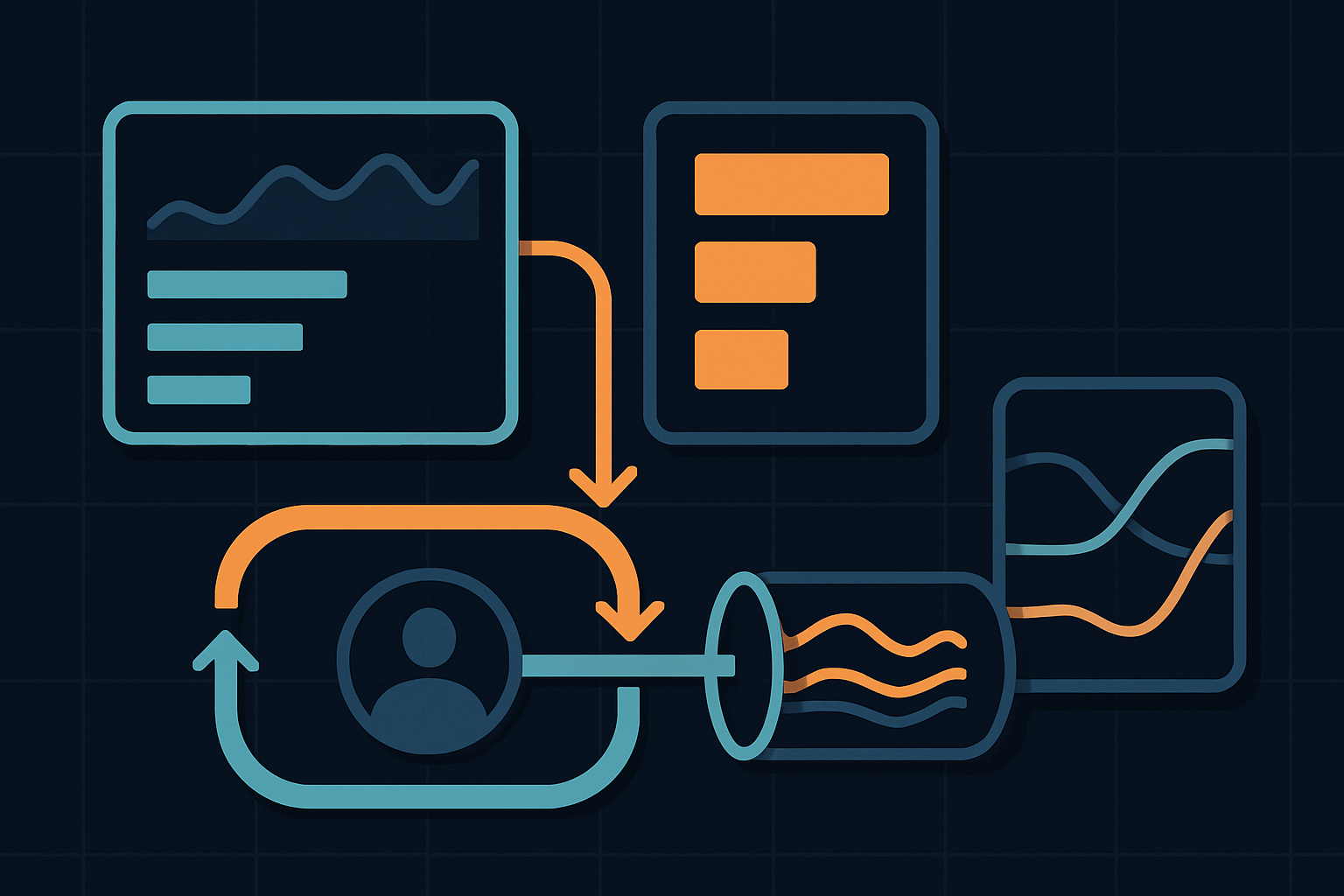
The signal: AI evaluation is becoming a product discipline, not a launch checklist. For the last two years, many teams treated evaluation as something that happened before deployment: run a benchmark, compare model scores, test a few golden prompts, ask internal users whether the answers feel better, then ship. That approach was understandable when AI systems were mostly copilots or chat surfaces. But as models move into workflows, agents, customer operations, code changes, research pipelines, and internal decision support, pre-launch evaluation is no longer enough.
The new signal is the rise of evaluation loops. Teams are building systems that test model behavior continuously: before release, during rollout, after user feedback, after model upgrades, after retrieval changes, and after prompt or tool updates. Evaluation is becoming part of the operating system around AI. A modern AI product may need unit tests for prompts, regression suites for tasks, policy checks for safety, retrieval quality checks, human review queues, production monitoring, cost tracking, and post-incident analysis. The model is only one part of the system; the evaluation loop is what keeps the system honest.
This matters because AI quality is unstable in ways traditional software quality is not. A normal API either returns the expected format or it does not. An AI system may return something plausible, partially correct, overly confident, subtly outdated, or correct for the wrong reason. A retrieval pipeline may work well on yesterday’s documents and fail after a permissions change. An agent may succeed on a scripted demo and fail when a real user phrases the same task differently. A model upgrade may improve benchmark reasoning while weakening a workflow-specific behavior the team quietly depended on.
The business pressure is also changing. Leaders want faster AI adoption, but they also want proof that systems are safe, useful, and worth the cost. Static benchmarks cannot answer those questions. A benchmark can say a model is strong in general. It cannot say whether the company’s support agent is escalating the right cases, whether the coding assistant respects local architecture, whether the legal research workflow cites the right sources, or whether an internal knowledge bot is leaking confidence when the source base is thin.
That is why evaluation loops are becoming a competitive capability. The teams that learn fastest from production behavior will improve fastest. They will see which prompts fail, which tasks are too ambiguous, which users need guardrails, which model calls are wasteful, and which workflows deserve automation. Evaluation becomes not only quality control, but strategy: it tells the organization where AI is actually working.
The reality check: Continuous evaluation is harder than running more tests.
The first trap is benchmark comfort. Public benchmarks are useful, but they are not a substitute for operational truth. A model that scores well on general reasoning may still fail a domain workflow because it lacks context, mishandles edge cases, overuses tools, ignores policy language, or produces outputs that are technically correct but unusable. Teams need local evaluations built around real tasks, real documents, real user intents, and real failure modes. Generic scores are the starting point, not the decision.
The second trap is measuring only the answer. AI systems increasingly include retrieval, memory, tools, permissions, routing, and human handoffs. If the final answer is bad, the cause may be the model, the prompt, the search index, stale documents, a broken connector, an overly broad memory, or a missing approval step. Evaluation must inspect the path, not just the output. Good traces show what context was used, what tools were called, what confidence signals appeared, and where the system chose not to act.
The third trap is feedback bias. User ratings are helpful, but they are noisy. People upvote answers that sound confident. They may not know when a citation is weak. Busy employees often skip feedback unless something is very good or very bad. Customer feedback can be skewed by frustration unrelated to the model. A serious evaluation loop combines user signals with expert review, automated checks, sampled audits, incident reports, and outcome metrics.
The fourth trap is drift. AI behavior changes even when the product team thinks nothing changed. Models get updated by vendors. Retrieval indexes refresh. Documents change. Business policies shift. User behavior evolves after people learn what the system can do. Cost constraints may trigger routing changes. A workflow that looked reliable in March can become fragile in May. Evaluation must be time-aware. It should detect regression, not merely certify a launch moment.
The fifth trap is ownership. If everyone assumes evaluation belongs to someone else, the loop breaks. Product managers may track usage, engineers may track latency, compliance may track policy, and domain experts may notice quality gaps, but no one owns the full behavior of the AI system. Production AI needs named owners for evaluation design, failure triage, acceptance thresholds, and release decisions. Without ownership, dashboards become decoration.
A practical evaluation loop starts small. Pick the workflows that matter most. Define what good means in business language before translating it into tests. Build a living set of representative cases, including edge cases and known failures. Track not only accuracy, but citation quality, refusal quality, escalation quality, cost per successful task, latency, and user correction rate. Review samples regularly. Keep regression tests when incidents happen. Separate model evaluation from system evaluation so teams know whether to change the model, the prompt, the retrieval layer, or the workflow itself.
The strongest teams will also treat evaluation as a learning system. Every failed answer should improve the test set or the product design. Every model upgrade should run against local regressions before release. Every high-risk workflow should have a human review path. Every dashboard should connect to a decision: ship, rollback, tune, escalate, or stop automating.
Key points to remember:
- Evaluation is becoming continuous - AI quality must be checked across deployment, feedback, updates, and real usage.
- Benchmarks are not production truth - Local workflows need local tests built from actual tasks and failure modes.
- Trace the system, not just the answer - Retrieval, tools, permissions, memory, and handoffs all affect quality.
- Drift is normal - Models, data, policies, and users change, so evaluation must detect regression over time.
- Ownership matters - Someone must own thresholds, triage, review, and release decisions.
The bottom line: The signal is that AI teams are moving from one-time model selection toward continuous evaluation loops. The reality check is that these loops require product discipline, domain judgment, instrumentation, and clear ownership. The winners will not be the teams with the prettiest benchmark slide. They will be the teams that can see how their AI behaves in production, learn from failures, and improve without losing control.