AI in Education: Personalized Learning vs. Systemic Challenges

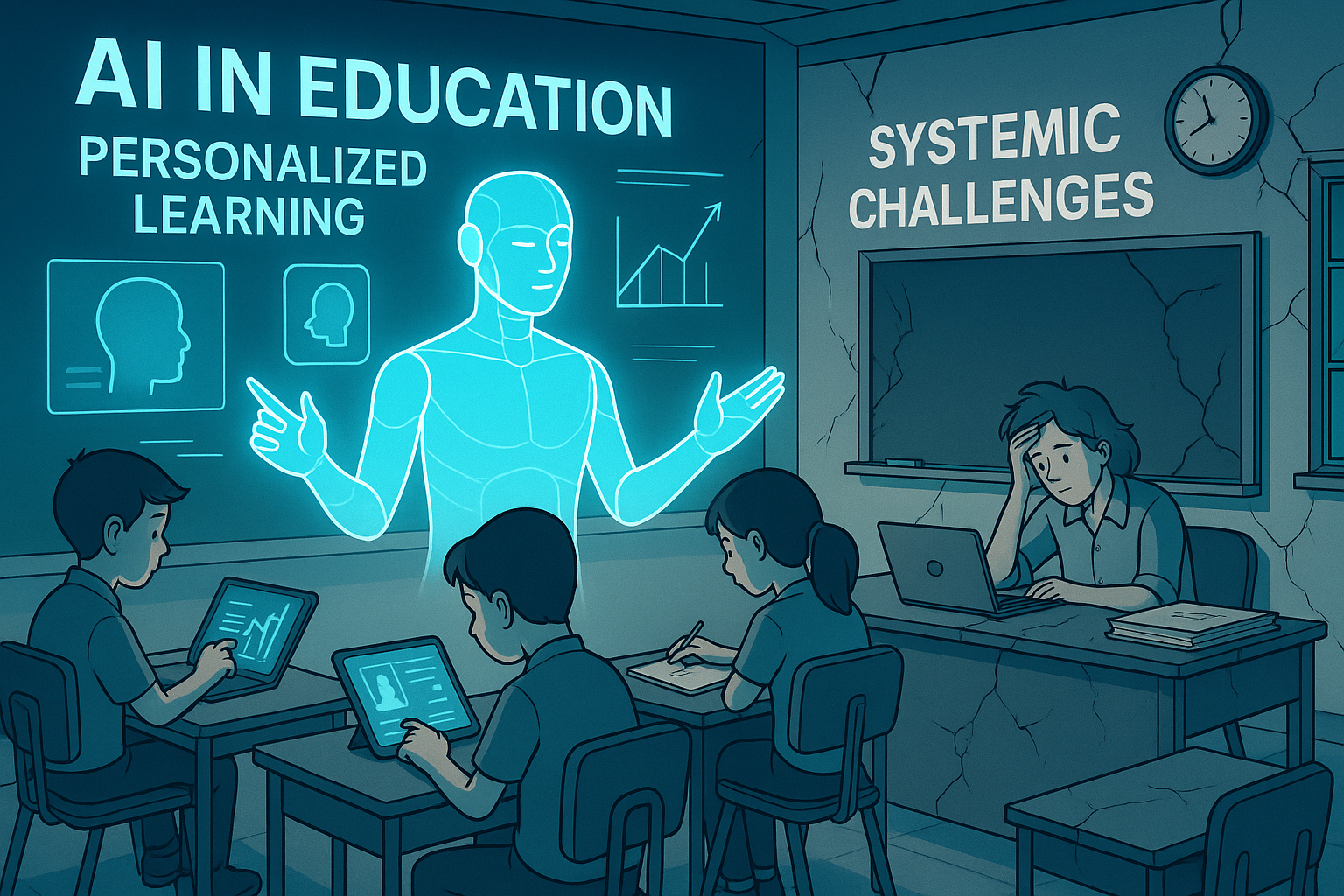
The signal: Artificial intelligence is poised to revolutionize education through truly personalized learning experiences. Adaptive learning platforms promise to tailor content to each student's pace, learning style, and knowledge gaps, potentially closing achievement gaps and democratizing access to high-quality education. The narrative suggests AI tutors will provide 24/7 support, instant feedback, and customized lesson plans, freeing teachers from administrative tasks to focus on mentorship and social-emotional learning. Venture investment in EdTech AI has surged, with promises of solving teacher shortages, improving learning outcomes, and preparing students for an AI-driven workforce.
The reality check: While AI-powered adaptive learning shows promise in controlled environments, systemic barriers prevent widespread adoption. Most schools lack the technical infrastructure, reliable internet, and device access needed for AI tools. Teacher training remains inadequate—many educators feel unprepared to integrate AI effectively or fear being replaced by technology. Equity concerns persist: AI systems trained on data from affluent districts may not serve under-resourced communities, potentially widening rather than closing achievement gaps. Additionally, data privacy regulations (like FERPA and COPPA) create compliance hurdles, and the "black box" nature of many AI algorithms makes it difficult for educators to understand or trust their recommendations. The real challenge isn't developing better algorithms but addressing infrastructure deficits, building teacher capacity, and ensuring equitable access.