AI Cost Governance: Usage Visibility vs. Unit Economics Reality

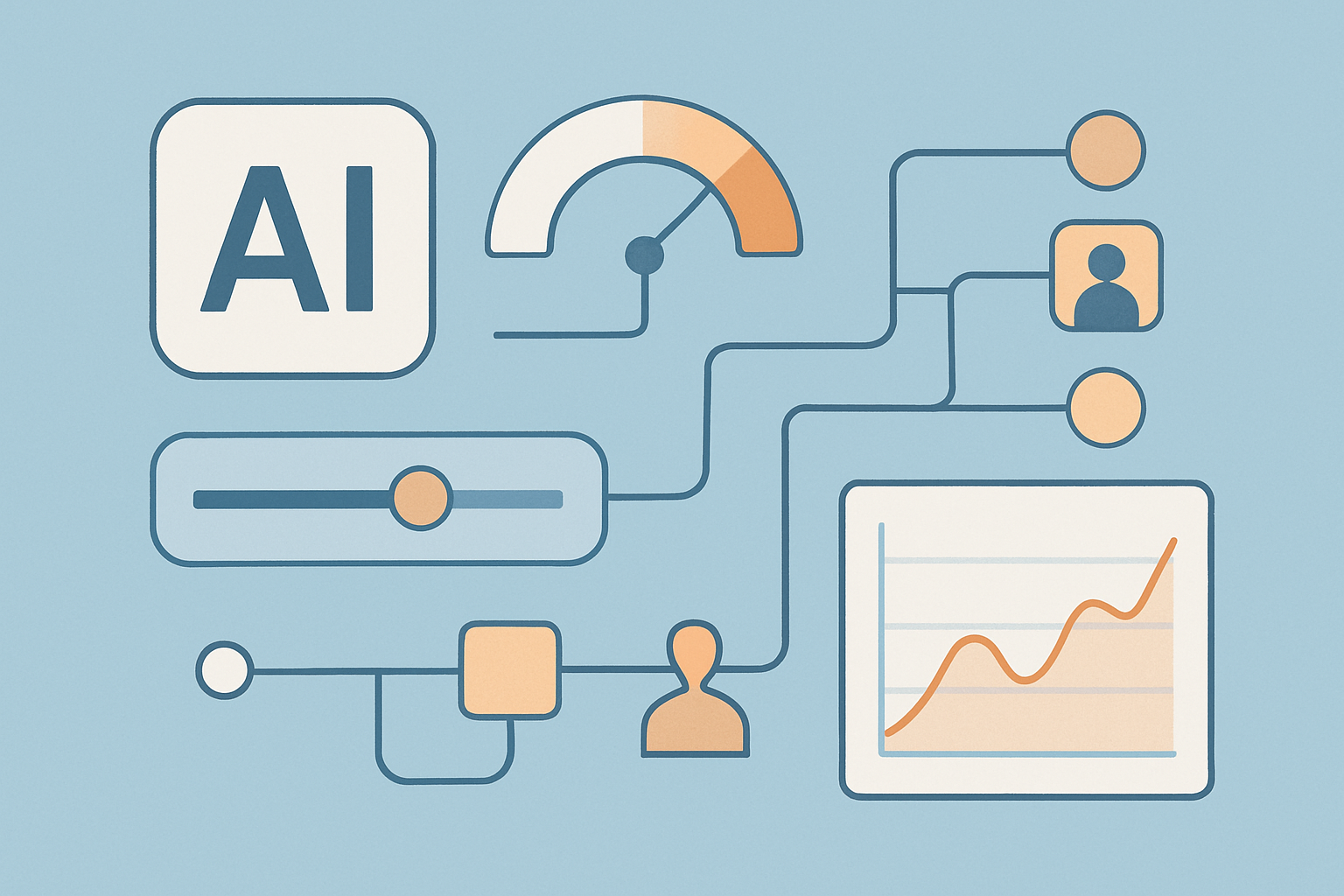
The signal: AI cost governance is becoming a boardroom topic. The first wave of enterprise AI adoption focused on access: give employees copilots, connect models to documents, run pilots in customer support, help engineers write code, and test agents against repetitive operational workflows. The next wave is focused on visibility: who is using which models, for what tasks, at what cost, with what business outcome?
This shift is healthy. AI spending does not behave like traditional software spending. A seat-based SaaS subscription is usually predictable. A model-powered workflow can vary by prompt length, context size, retrieval volume, tool calls, retries, image generation, reasoning depth, and agent loops. One team may use a model to summarize short tickets. Another may send huge knowledge bases into long-context prompts. A third may run automated evaluations overnight. The invoice can grow before finance understands the usage pattern.
That is why usage dashboards, spend caps, internal chargeback models, and AI observability tools are gaining attention. Leaders want to know which teams are experimenting responsibly, which workflows are burning tokens without measurable value, and which applications deserve more investment. The promise is not only cost control. Better visibility can improve product decisions. If a task requires a premium model only five percent of the time, routing can send most requests to cheaper models and reserve expensive reasoning for ambiguous cases. If a workflow repeatedly fails and retries, the fix may be better data, clearer prompts, narrower scope, or a human checkpoint rather than more compute.
There is also a strategic signal. As AI moves from experiments to embedded product features, cost becomes part of unit economics. A chatbot that costs a few cents per conversation may be easy to justify in high-margin enterprise support. The same architecture may be impossible in a low-margin consumer workflow. A code review assistant that saves senior engineers time may be worth a premium model. A background summarizer for every document may need batching, caching, smaller models, or no model at all.
In other words, AI cost governance is not just procurement discipline. It is product architecture. It asks teams to connect model choice, user experience, latency, accuracy, risk, and margin into one operating model.
The reality check: Seeing spend is not the same as controlling economics.
The first trap is dashboard comfort. A dashboard can show token volume, request count, provider mix, and cost by team, but it cannot automatically tell whether the spending was worthwhile. A high-cost workflow may be excellent if it prevents fraud, speeds a critical sales process, or reduces expert labor. A low-cost workflow may still be wasteful if nobody uses the output or if humans must redo the work. The key metric is not raw AI spend. It is cost per useful outcome.
The second trap is blunt restriction. Some organizations respond to rising invoices by banning premium models, lowering context windows, or forcing every team onto the cheapest provider. That may reduce the bill while damaging reliability. Cheap models can become expensive when they produce more errors, require more retries, increase review burden, or frustrate users. The right question is not “Which model is cheapest?” It is “Which model-route-workflow combination delivers the required quality at the lowest total cost?”
The third trap is hidden labor. AI cost calculations often focus on provider invoices while ignoring human work around the system: prompt maintenance, evaluation design, exception handling, compliance review, support tickets, incident response, and user training. A workflow that looks cheap in tokens may be expensive operationally if every tenth output needs escalation. Sustainable AI economics includes both compute cost and human supervision cost.
The fourth trap is agent sprawl. Agentic systems can multiply cost because they plan, call tools, inspect results, revise, and try again. This can be valuable for complex tasks, but it can also create invisible loops. Without step budgets, timeout rules, task boundaries, and trace review, an agent may spend money exploring paths a human would have rejected quickly. Autonomy needs accounting.
The fifth trap is weak ownership. AI spending often sits between product, engineering, data, security, and finance. If nobody owns the full chain from business case to model routing to outcome measurement, cost governance becomes either a finance complaint or an engineering cleanup task. The teams that succeed will assign owners for each AI workflow and require them to define expected value, acceptable cost per outcome, quality thresholds, fallback paths, and review cadence.
The practical answer is to manage AI costs like a product system, not a utility bill. Start by classifying workflows: employee productivity, customer-facing automation, decision support, content generation, engineering assistance, monitoring, and autonomous operations. Each class needs different quality standards and risk controls. Then measure cost at the workflow level, not only the model level. Track successful completions, escalations, retries, latency, user adoption, human review time, and business impact.
Teams should also design for routing from the beginning. Use smaller models for routine classification, retrieval, formatting, and drafts. Use premium models for ambiguity, high-risk reasoning, synthesis, and edge cases. Cache repeated context. Trim unnecessary prompt history. Separate “nice to know” context from decision-critical evidence. Add human checkpoints where errors are costly. Run evaluations before changing providers or model versions.
Key points to remember:
- AI costs are usage-shaped - Context size, retries, tool calls, and agent loops can matter more than seat count.
- Dashboards are only a start - The useful metric is cost per reliable business outcome, not token volume alone.
- Cheapest is not always cheaper - Lower model costs can create higher review, retry, support, or error costs.
- Agents need budgets - Autonomy should come with step limits, traceability, and clear stopping rules.
- Ownership decides discipline - Every AI workflow needs someone accountable for value, quality, risk, and cost.
The bottom line: The signal is that AI cost visibility is maturing quickly because enterprises can no longer treat model usage as a small experimental line item. The reality check is that visibility alone does not solve unit economics. Sustainable AI adoption will come from workflow-level ownership, intelligent routing, evaluation discipline, human supervision design, and a clear view of cost per useful outcome.