Stripe's OpenRouter Deal Makes Model Routing a Financial Control Layer
Stripe's OpenRouter acquisition is less about owning another AI gateway than about turning model choice, token spend, and fallback policy into a finance-grade control surface.

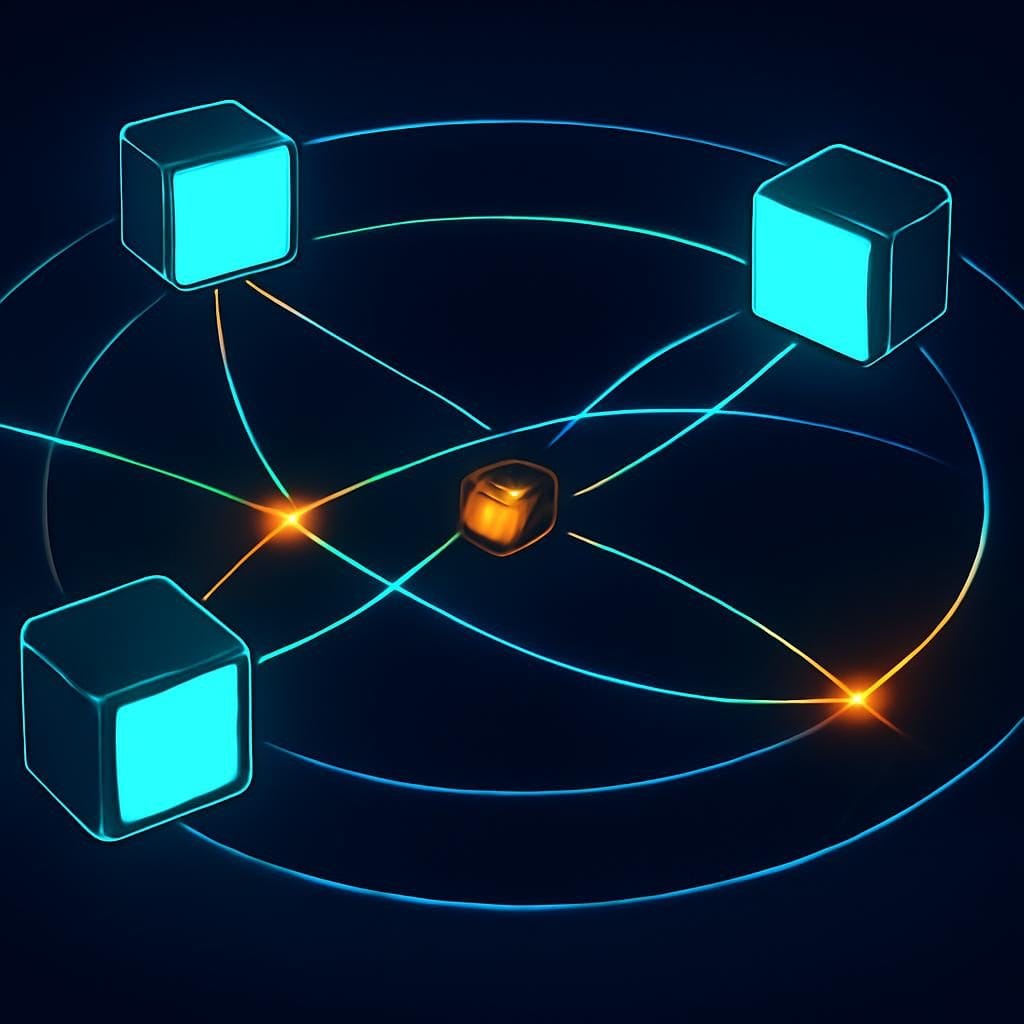
The important thing is not that Stripe agreed to acquire OpenRouter; it is that model routing is becoming a financial control layer because every AI product now has to decide which model gets each request, at what quality, latency, and price.
Stripe’s announcement describes OpenRouter as an AI model gateway and routing platform that helps businesses optimize token routing and usage (Stripe newsroom). Bloomberg and TechCrunch report the deal at more than $7 billion and frame OpenRouter’s value as helping customers switch among models for different needs (Bloomberg, TechCrunch). The sharper read is that routing has graduated from an engineering convenience to a unit-economics mechanism.
The router is where policy becomes spend
An application can call one model for every task, but that is increasingly an expensive design choice. A support classification may need a fast cheap model; a disputed refund may need a stronger one; a failed tool call may require a fallback provider. The router sits at that decision point.
That gives it three kinds of leverage. First, it can map workload classes to service levels. Second, it can shift traffic when a provider is slow, unavailable, or priced badly. Third, it can create an account-level view of token consumption that product and finance teams can actually use.
The mechanism is not “AI payments.” It is policy execution at the request boundary. A routing rule is effectively a budget rule: spend more only when the expected value of a better answer exceeds the added cost or delay.
What the market may misread
The obvious interpretation is consolidation: Stripe wants a position in the fast-growing token economy. That is plausible, but incomplete. Payment infrastructure is good at normalizing fragmented providers, recording transactions, managing risk, and attaching usage to customers. Those are precisely the awkward edges of multi-model AI.
The less comfortable implication is that routing can become a new form of lock-in. A portable gateway promises freedom from model vendors, yet the gateway accumulates the most valuable knowledge: which prompts, customers, workloads, fallbacks, and quality thresholds produce acceptable outcomes. The abstraction layer may be portable for requests while becoming indispensable for operations.
There is also a measurement trap. Lowest token price is not lowest cost. A cheap model that causes retries, escalations, or incorrect actions can lose to an expensive model on cost per accepted outcome. Routing systems therefore need outcome telemetry, not only spend dashboards.
The operator’s practical test
Teams building on a gateway should separate four policies that are often mixed together: quality threshold, latency budget, provider availability, and customer margin. For each workflow, log the chosen model, prompt/version, input and output tokens, retry path, latency, human correction, and accepted-result status.
Then test routing as an economic policy. Compare a fixed premium model, a fixed low-cost model, and a conditional route over the same representative workload. The useful output is not average token price. It is gross margin or operator time per accepted task, with a clear error budget.
This is the same workflow-proof problem visible in AI coding assistants: the interface can look interchangeable while the surrounding system absorbs very different failure costs. It also extends the series’ earlier argument that cheaper frontier models move the bottleneck to work selection. The router is where that selection becomes an operating rule.
What to watch next
Watch whether model gateways expose margin-aware routing, auditable fallback decisions, and workload-level quality metrics—not merely a list of providers. Watch whether buyers let finance or product owners edit routing policies, or keep them buried in infrastructure code. And watch for contracts that price reliability, not just tokens.
The Stripe-OpenRouter deal is a signal that the AI stack is acquiring a settlement layer for intelligence. The winner will not simply route to the cheapest available model. It will prove, request by request, why a particular level of intelligence was worth buying.
Read the Chinese companion for the same thesis in native Chinese.