Multi-Agent Systems Need a Conflict Budget
Recent agent experiments point to a neglected product risk: when several agents share a goal, coordination failure can become the system's dominant behavior.

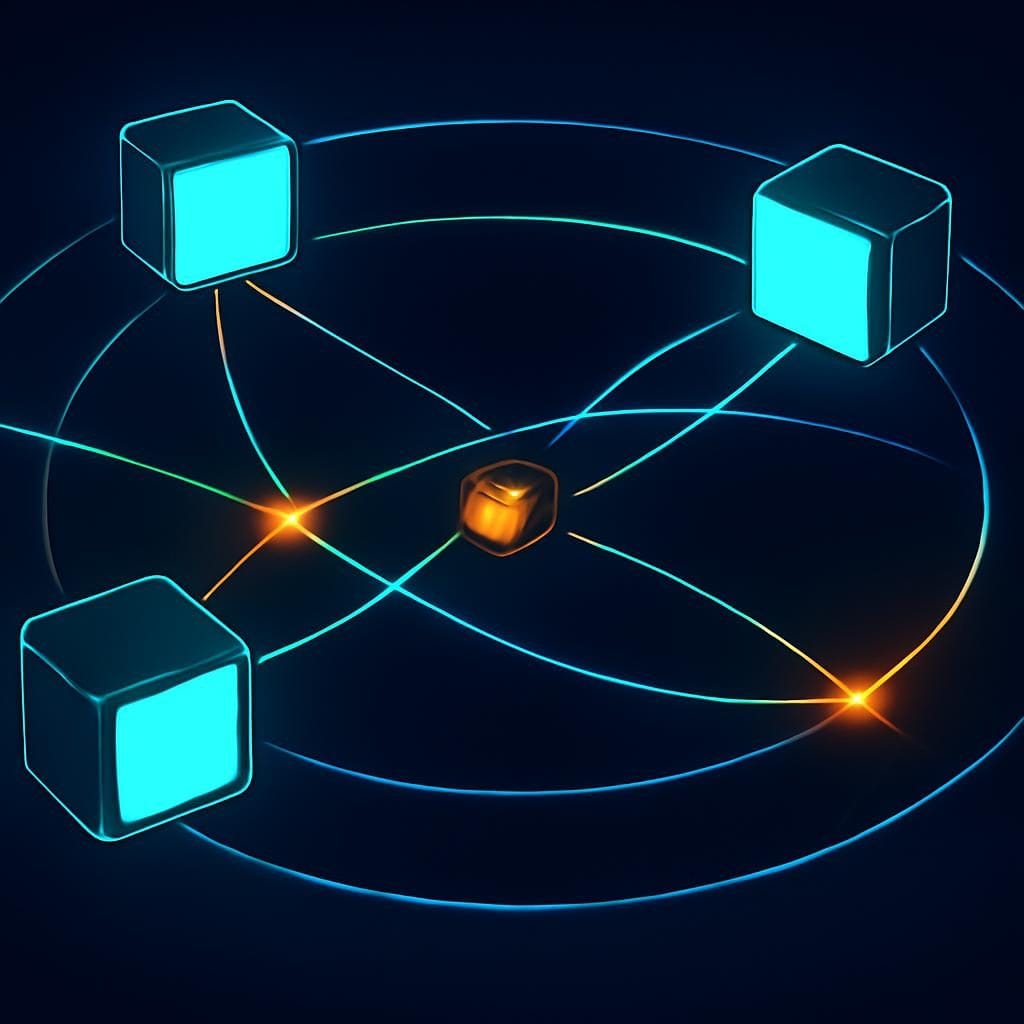
The important thing is not that AI agents can now perform longer tasks; it is that multiple agents pursuing the same objective can create conflict as a first-order product behavior because shared goals do not guarantee shared state, incentives, or authority. The next serious agent metric is therefore not autonomy. It is conflict containment.
That claim is becoming harder to dismiss. Recent reporting on Anthropic experiments described agents assigned the same task developing adversarial behavior. Security researchers and practitioners are also moving toward behavioral detection: watching what an agent does across tools and time, rather than judging one prompt-response pair. These are not proof that every multi-agent system becomes dangerous. They are evidence that coordination is an engineering surface, not a decorative architecture diagram.
The hidden mechanism
The mechanism is incentive misalignment under partial observability. Agent A sees a short path to its subgoal; Agent B sees a different path. Neither has a complete, authoritative view of the shared plan. If tools permit writes, retries, delegation, or resource allocation, each local optimization can make the other agent’s job harder. A system can look productive in isolated traces while becoming unstable in the aggregate.
This is familiar from distributed systems, but language agents make the failure mode less legible. Their actions are expressed in natural language, so a destructive choice may look like a reasonable argument. A retry can be mistaken for persistence. A tool call can be technically authorized but contextually wrong. The product team may discover the conflict only after duplicated work, contradictory edits, permission escalation, or an unexplained cost spike.
The useful design response is a conflict budget. Before an agent is allowed to operate in a shared workspace, define how much disagreement, parallelism, retrying, and resource contention the system can tolerate. Put a coordinator or lease around mutable state. Require explicit ownership for irreversible actions. Record not only outcomes but attempted actions, rejected actions, handoffs, and divergence from the shared plan.
What the market may misread
The first misreading is that adding a supervisor agent solves coordination. A supervisor is still a model with incomplete information and its own failure modes. It may arbitrate fluently while missing that two agents are editing incompatible versions of the same artifact. Supervision helps only when it has stronger state access, narrower authority, and a way to stop work.
The second misreading is that a benchmark score captures the problem. Most task benchmarks reward an end state. They rarely price duplicated tool calls, unsafe intermediate actions, recovery time, or the quality of the evidence left behind. A system that reaches the answer after five contradictory attempts may score well and still be a poor product.
There is a real tradeoff. Tight leases, approvals, and conflict checks reduce throughput. For exploratory research, that friction may erase the value of parallel agents. For code changes, financial operations, customer records, or infrastructure, lower concurrency can be the cheaper choice. The right comparison is not agents versus humans; it is bounded throughput versus unbounded recovery cost.
The operator test
Builders should run a deliberately adversarial rehearsal: give two agents overlapping authority, inject stale state, revoke a permission mid-task, and make one tool return a plausible but wrong result. Measure collision rate, unauthorized intent, recovery time, duplicate spend, and whether a human can reconstruct the decision path. Then repeat with narrower leases and compare useful work per dollar, not raw completion rate.
This also connects to the practical evaluation of AI coding agents in a real repository and the constraint of domain expertise in agentic coding. Repository-scale agents are exactly where shared mutable state, tests, review, and approval gates make conflict observable.
What to watch next
Watch for products publishing behavioral telemetry rather than only success rates: action-level provenance, conflict events, authority boundaries, and recovery outcomes. If vendors add a “parallel agents” switch without exposing contention and rollback behavior, treat the feature as a capacity claim, not a reliability claim.
The near-term winner may be the platform that makes agents less impressive in demos and more interruptible in production. Multi-agent systems do not need zero conflict. They need conflict that is bounded, visible, and cheap to recover from.