The IDE Is Becoming the Agent Gatekeeper
The important thing is not that Xcode added more coding agents; it is that Apple is turning the IDE into the gatekeeper for developer context because the workflow host decides what an agent can see, change, preview, and ship.

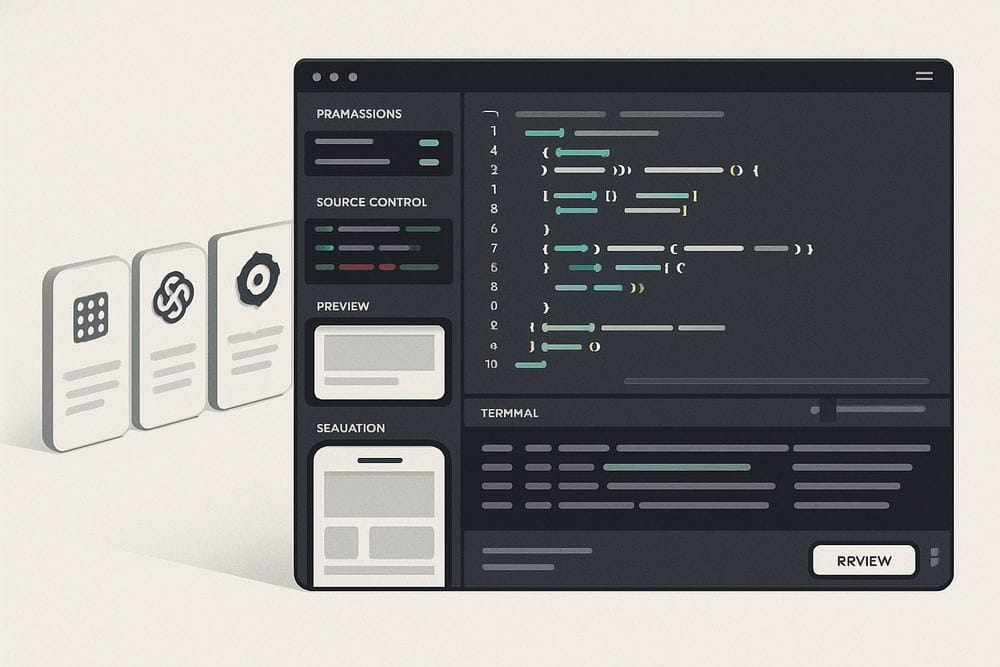
The IDE Is Becoming the Agent Gatekeeper
The important thing is not that Xcode added more coding agents; it is that Apple is turning the IDE into the gatekeeper for developer context because the workflow host decides what an agent can see, change, preview, and ship.
Apple's June 8 developer announcement says Xcode 27 brings agentic coding deeper into the developer workflow, with models and agents from Anthropic, Google, and OpenAI available inside Xcode. The same announcement describes conversations with agents that include interactive planning, multiturn Q&A, Markdown rendering, code changes, and previews in the same workbench. Apple Developer material also says Xcode supports code interaction with the large language model of the developer's choice, while predictive code completion runs on an on-device model trained for Swift and Apple SDKs.
The easy read is that Apple is catching up to the coding-agent race. That is true, but it is not the sharp part. The sharper read is that Apple is refusing to let external agents become the primary surface for Apple-platform development. If Claude, Codex, Gemini, or another agent is going to help build an iOS app, Apple wants that work mediated through Xcode's project model, previews, device tooling, source editor, and permission boundaries.
The named mechanism is IDE-mediated context gating. A coding agent is only as useful as the context and tools it can access: files, symbols, dependencies, logs, UI previews, device states, tests, source control, design artifacts, and deployment targets. When the agent lives outside the IDE, the agent vendor tries to build or borrow that context layer. When the agent lives inside Xcode, Apple controls the context boundary. The model provider supplies reasoning and generation. The IDE decides what becomes visible, actionable, reversible, and reviewable.
That distinction matters because coding agents are not just autocomplete with longer messages. They make plans, touch multiple files, run commands, interpret errors, and propose patches. The product surface is therefore no longer the chat box. It is the control system around the chat box: what the agent can read, which tools it can call, how changes are displayed, how previews are rendered, when the developer approves a diff, and whether the result can be tested on real or simulated devices.
The missed tradeoff is portability versus native control. Developers like provider choice because model quality changes quickly. A team may want Claude for one refactor, Codex for another, Gemini for app-specific work, and a local or enterprise model for sensitive code. Apple is leaning into that preference by supporting multiple model providers and agents. But provider choice inside a native IDE is not the same as agent independence. The more useful the integration becomes, the more the durable workflow state sits in Xcode: project structure, previews, platform APIs, device targets, and eventually the history of why a change was made.
This creates a specific operator behavior. Individual developers will not evaluate agents only by benchmark scores. They will ask a more practical question: which agent fits the current workbench with the least context friction? If an agent can see the right files, understand SwiftUI previews, connect to design input, propose a diff, run tests, and hand back control cleanly, it may beat a stronger standalone model that requires copy-paste, manual setup, or fragile repository indexing.
Apple's Platforms State of the Union adds an important clue. The company described Xcode support for Agent Client Protocol so compatible agents can be brought into the IDE, and it showed an example flow that starts from a Figma design, refines a SwiftUI implementation, makes it resizable using a skill, and posts a pull request to GitHub. That is not just code generation. It is a workflow graph across design, implementation, preview, review, and source control. The agent is a participant. Xcode is the orchestration surface.
The second-order consequence is that agent vendors risk becoming interchangeable reasoning engines inside someone else's workflow host. The standalone coding-agent companies want to own the project memory, terminal session, task queue, and review loop. Platform owners want to expose those capabilities while keeping the user anchored to the native development environment. If Apple succeeds, model providers get distribution into Apple developers, but Apple keeps the highest-leverage control plane: the place where source context, UI context, device context, and ship context meet.
This is also why on-device completion is strategically relevant. It is not only a privacy feature. It creates a two-tier model architecture: fast local assistance for low-risk inline work, explicit cloud-agent use for heavier planning or multi-file changes. That split gives enterprises and cautious developers a cleaner mental model. Everyday suggestions can remain close to the machine; higher-agency work can be opted into, attributed, and reviewed. The builder implication is concrete: coding-agent products need policy-aware context routing, not just better prompts.
For teams building developer tools, the lesson is blunt. Do not treat the IDE as a passive text editor. The IDE is becoming the authorization layer for agents. If your product needs to work inside developer workflows, you need to integrate with the places where developers already review diffs, run tests, inspect previews, manage devices, and open pull requests. A clever agent that cannot fit the review and preview loop will feel impressive in a demo and awkward in daily work.
For internal platform teams, the practical move is to separate model approval from workflow approval. Approving "use OpenAI" or "use Anthropic" is too coarse. The more useful policy is workload-specific: local completion for routine code suggestions; cloud agents for non-sensitive refactors; stricter approval for repository-wide edits; explicit human review before dependency, credential, build-system, or deployment changes. The control point should be attached to the action and context, not only the brand of model.
A reasonable counterargument is that Xcode is still a platform-specific IDE, and many developers live in VS Code, JetBrains tools, terminals, browsers, or cloud workspaces. Apple's move will not define all software development. It may also frustrate developers if the agent integrations are weaker than the standalone products, or if provider authentication and tool permissions become clunky. The winning surface must reduce friction, not merely claim control.
But that limitation is also the test. If developers keep jumping out of Xcode to use standalone agents, the IDE has failed to become the agent gatekeeper. If they stay inside Xcode because previews, device context, diffs, design inputs, and source control are better wired there, then the strategic layer has moved. The falsifiable watch-next indicator is not just how many model logos appear in IDE settings. Watch whether developers start choosing agents based on native workflow affordances: best SwiftUI preview loop, cleanest PR handoff, safest file access policy, strongest device debugging context, or best local-versus-cloud routing.
The broader market read is that coding-agent competition is moving from model IQ to context ownership. Model quality still matters; a weak agent inside a great IDE is still weak. But the next durable advantage may belong to whoever owns the workbench where intent becomes code, code becomes a preview, preview becomes a diff, and diff becomes shipped software.