Digital housing design can compress permitting—but only when rules travel with the model
A new housing showcase points to a practical AI frontier: carrying machine-readable rules from design into permitting and construction, with humans retaining approval authority.

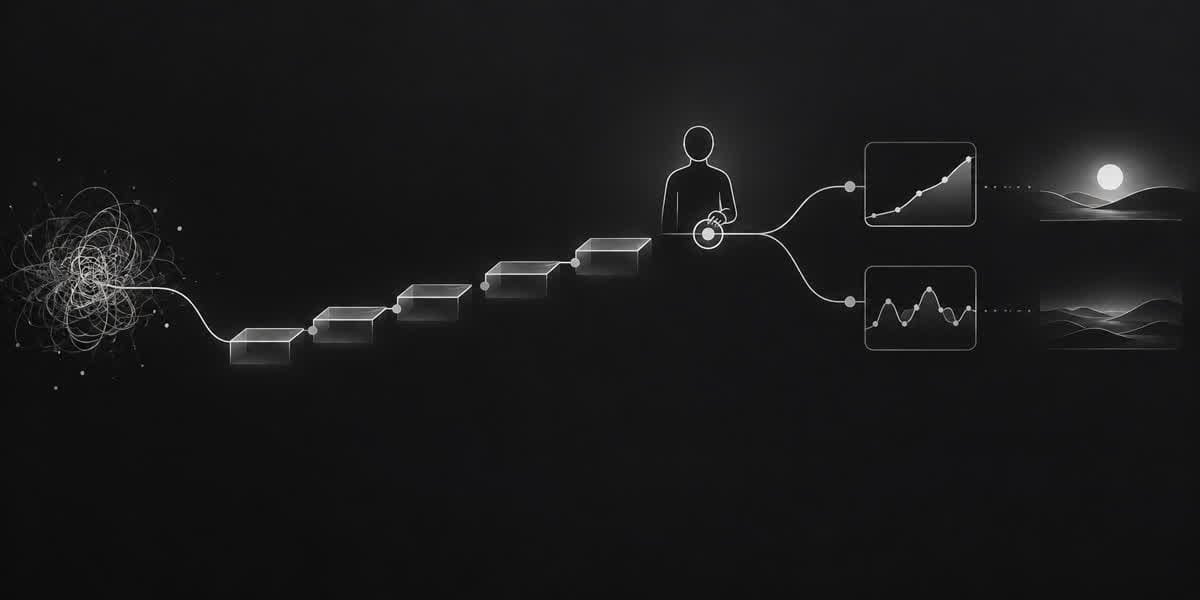
The most useful AI change in housing may be less glamorous than an autonomous architect: making design rules machine-checkable before a permit package reaches a reviewer. A Nov. 17 showcase from the B.C. Housing Innovation Garden described more than 70 partners working across 14 projects, including Digitally Accelerated Standardized Housing (DASH). Its practical claim is that standardized components and digital design can carry work from early design through permitting and construction documentation with less rework.
That is a workflow signal, not proof that AI can approve homes. For builders, architects, and public agencies, the opportunity is to move predictable checks upstream while keeping code interpretation, exceptions, and public accountability with qualified people. The same boundary matters to housing affordability: fewer avoidable revisions could help, but a faster digital queue does not by itself produce cheaper or more equitable homes.
What changed in the real-estate workflow
The old handoff is fragmented. A designer produces drawings, a supplier reviews manufacturability, a permit team checks a submission against local rules, and a builder translates the approved set into shop and construction documents. Each translation can introduce omissions, inconsistent dimensions, or a late discovery that a standard component does not fit a local requirement.
The DASH example reverses part of that sequence by involving prefabrication suppliers from the start. A structured digital model can represent components, constraints, and required evidence. A rules engine or AI assistant can flag missing fields, geometry conflicts, or mismatches against a published checklist before submission. The result is a better-prepared human review queue—not an automatic approval.
This connects to the series’ earlier distinction between AI permit intake and approval and to the broader lesson from AI construction document review: the value is often exception routing, while the liability remains attached to the professional and authority who decides.
How the AI-assisted workflow works
A defensible implementation has four layers. First, the project team establishes a versioned source of truth: site constraints, applicable code provisions, approved component libraries, energy assumptions, and the required submission schema. Second, a model or rules service maps design objects to those requirements. It should return evidence—object IDs, rule versions, source passages, and confidence—not a black-box “compliant” label.
Third, the system creates an exception queue. A missing fire separation, uncertain accessibility interpretation, or out-of-date component specification should be routed to the right reviewer. High-confidence clerical checks can be automated; ambiguous or safety-critical findings should require sign-off. Fourth, every change is logged so a reviewer can reconstruct which model, rule set, and input data produced a warning.
AI can help extract information from drawings, compare versions, summarize conflicts, or suggest where documentation is incomplete. It should not silently infer that a local authority will accept an interpretation, and it should not turn a vendor’s claimed time saving into a regulatory fact.
Who benefits and what could break
Builders may reduce redesign loops. Suppliers can see constructability constraints earlier. Permit offices may receive more complete packages and spend more time on substantive judgment. Residents could benefit if the saved effort is converted into more supply, accessibility, or better communication rather than simply higher throughput for the same bottleneck.
But the risks are concrete. Training data and rule libraries can be stale, incomplete, or biased toward common building types. A model may perform well on standard modules and fail on adaptive reuse, informal conditions, or unusual sites. Digital exclusion can make participation harder for small builders or residents without technical access. Sharing plans and site data raises privacy and security questions. If an AI-generated omission survives into construction, responsibility cannot be outsourced to the model provider.
The public materials describe a showcase and project direction, not a controlled estimate of approval-time reduction, cost savings, or housing production. Those claims need project-level measurement.
Practice lab
Exercise: Using a de-identified, already-approved sample set, test whether a machine-readable checklist improves review preparation without making approval decisions.
Inputs and steps: Create 20–30 representative permit packages, freeze the applicable rule version, and have two qualified reviewers mark required documents and known exceptions. Run a rules-assisted extraction pass, then have reviewers inspect the generated queue without seeing the baseline labels. Record omissions, false flags, time to first review, and unresolved ambiguity. Do not submit the output to an authority or use it to make a property or financial decision.
Baseline, metrics, observation window, and stop condition: Compare with the existing manual intake process over four weeks. Track omission recall, false-positive rate, reviewer minutes per package, disagreement rate, and the share of findings with traceable evidence. Stop if a safety-critical item is missed, if reviewers cannot reproduce a finding from its source rule, or if performance differs materially across building types or accessibility cases. A shorter queue is not success if substantive errors rise.
Builder and operator takeaway
- Treat digital rules, component libraries, and model versions as governed infrastructure.
- Automate completeness and comparison checks; reserve interpretation and approval for accountable humans.
- Measure error and equity alongside cycle time, and publish what the system cannot assess.
Links / sources
- DIGITAL housing showcase (Nov. 17, 2026) — describes the HGI portfolio and DASH workflow; a showcase, not an independent impact evaluation.
- Correction and updated showcase release (Nov. 18, 2026) — clarifies the project context and digital-rule discussion.
- AI permit intake can catch omissions—but it cannot define approval — related workflow boundary.
Read the Chinese companion article.