AI Mental Health Frontier — The Therapy Room Now Has a Hidden Second Channel
APA survey data shows patients are bringing chatbots into therapy. The product challenge is no longer only chatbot safety, but making AI use visible, interpretable, and governable in care.

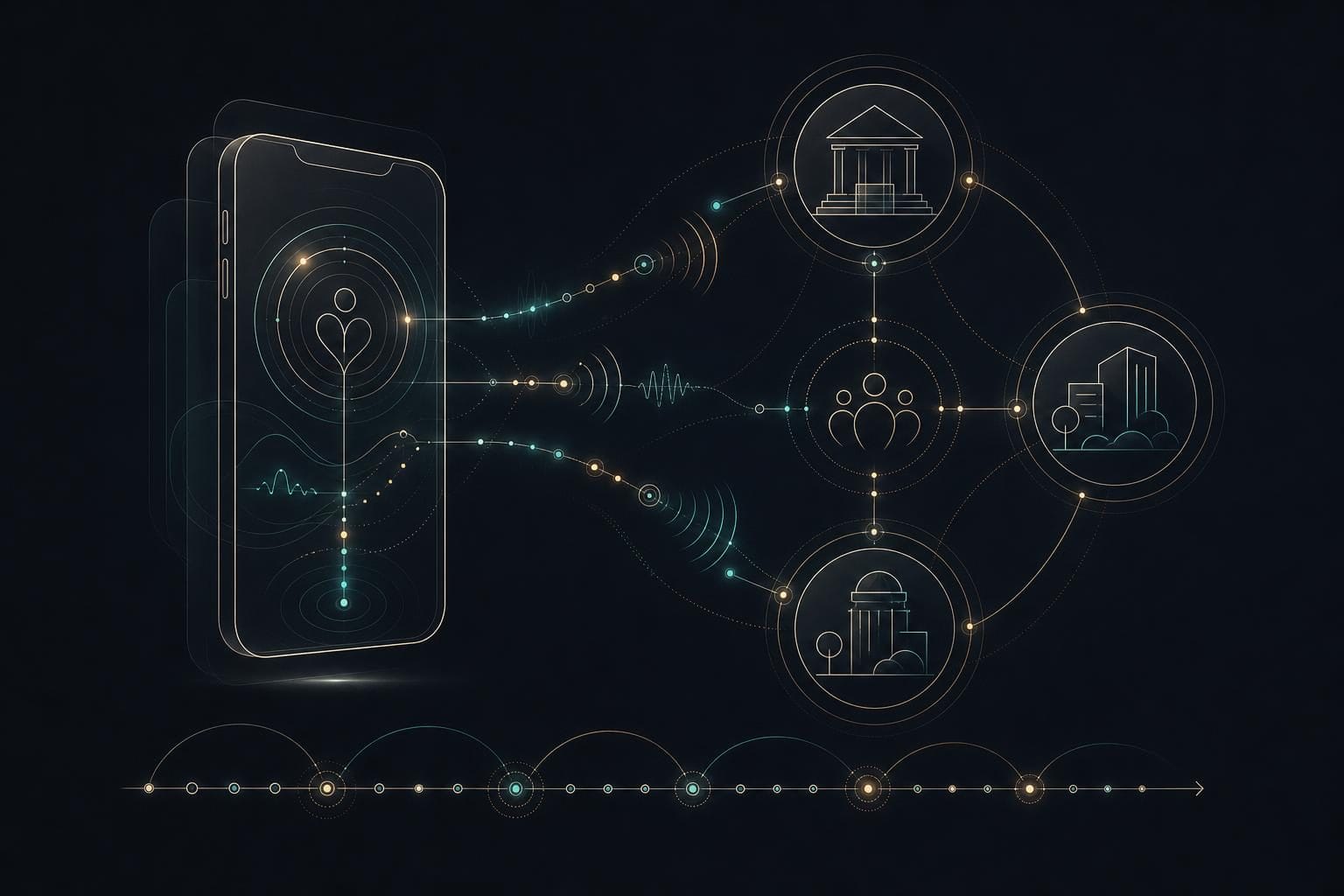
Patients are already bringing generative AI into therapy. The American Psychological Association’s 2026 Chatbots and Mental Health Survey reports that more than a third of psychologists have patients using AI as an additional mental-health professional. That changes the product question: a clinic does not need to deploy a chatbot for AI to become part of its care pathway.
The hidden channel matters because it can shape what a patient discloses, believes, or brings into a session without appearing in the clinical record. For builders and clinical operators, the near-term frontier is not making a chatbot sound more therapeutic. It is making patient AI use visible enough to discuss, safe enough to route, and bounded enough to govern.
The frontier signal
The APA survey, conducted online among U.S. adults in April 2026 using a probability-based sample, is a useful deployment signal rather than a clinical-efficacy trial. Its headline finding is behavioral: people are using chatbots around mental-health care, and psychologists are encountering that use in practice.
Recent coverage has sharpened the concern. A November 2026 report on psychologists’ views cited high levels of concern about missing clinical oversight and inaccurate information. That secondary report should not be treated as a prevalence estimate for all patients, but it reinforces the operational implication of the APA result: “not our product” does not mean “outside our safety surface.”
Why clinicians and builders care
The second channel can affect intake, formulation, adherence, and escalation in at least four ways:
- Pre-session framing. A chatbot may provide a label or explanation that becomes the patient’s starting hypothesis.
- Selective disclosure. Patients may tell the chatbot something they do not tell a clinician, or omit that interaction entirely.
- Advice drift. The patient may receive confident but incorrect guidance between appointments.
- Crisis ambiguity. A concerning exchange may exist in a vendor’s system while the care team has no signal that it happened.
This is a workflow problem, not an argument that clinicians should police every consumer tool. A useful system should make it easy to ask, “Did you use an AI tool about this?” without shaming the patient, and easy for a clinician to record the answer without turning it into surveillance.
The opportunity also connects to WisdomChain’s earlier analysis of how patients use AI in clinical assessment and the safety case for generative-AI mental-health devices. The common design principle is bounded visibility: understand where AI enters the pathway before claiming that the pathway is controlled.
Technical read-through
The minimum viable architecture is a provenance and routing layer around the clinical workflow:
- Disclosure capture: ask at intake and periodically whether the patient used a chatbot, for what purpose, and when.
- Artifact import with consent: allow a patient to share a transcript or structured summary, while preserving the source and timestamp rather than treating generated text as patient fact.
- Uncertainty labels: distinguish patient-reported content, model-generated interpretation, clinician observation, and verified clinical data.
- Risk routing: send high-sensitivity signals to a human review queue with explicit service-level expectations; do not let a classifier silently close the loop.
- Auditability: log the model, prompt or policy version, output, reviewer action, and eventual disposition.
This resembles a data-lineage problem more than a chatbot-personality problem. The system must answer: what entered the care process, through which channel, under whose control, and what happened next? Privacy design is part of the model boundary. A transcript imported for discussion should not automatically become a permanent psychotherapy note, and a vendor’s retention policy should not be hidden behind a generic “AI assistant” label.
Clinical reality check
The APA material documents reported use and clinician experience; it does not establish that chatbots improve outcomes, replace therapy, or create a particular level of clinical risk. The news coverage is also not a substitute for a peer-reviewed safety evaluation. Builders should resist converting concern into a universal risk score.
There are practical failure modes on both sides. A mandatory disclosure flow can feel accusatory and reduce trust. A completely optional flow can miss the people who most need review. Transcript ingestion can expose sensitive third-party information. A risk model can over-triage ordinary reflective use or under-triage a subtle crisis disclosure. Clinicians can also be burdened by a queue filled with low-value AI artifacts.
The right test is therefore workflow-level: does disclosure improve shared understanding, does review change decisions, and can the team explain what it did when the AI channel mattered? If not, more model sophistication will not solve the governance gap.
Builder takeaway
- Add a neutral, repeated AI-use question to intake and follow-up, with a “prefer not to say” path.
- Preserve provenance and uncertainty when patients share chatbot content; never flatten it into verified history.
- Test escalation on realistic patient-provided AI artifacts, including benign, misleading, and high-sensitivity cases.
- Measure clinician burden, disclosure rates, reviewer agreement, false escalation, and missed-signal audits.
- Make retention, consent, and deletion behavior visible at the moment a transcript enters the product.
Links / sources
- APA: Patients are bringing AI to therapy — 2026 Chatbots and Mental Health Survey overview.
- APA: Topline data tables — survey tables and methodology.
- APA health advisory on chatbots and wellness apps — cautions on validation, oversight, and safety protocols.
- WisdomChain: Clinicians need to ask how patients use AI — related workflow analysis.