AI due diligence can compress factory-built housing—if the exception list stays human
HUD is showcasing factory-built housing and AI-assisted parcel due diligence. The practical lesson is to compress evidence gathering, not automate approval.

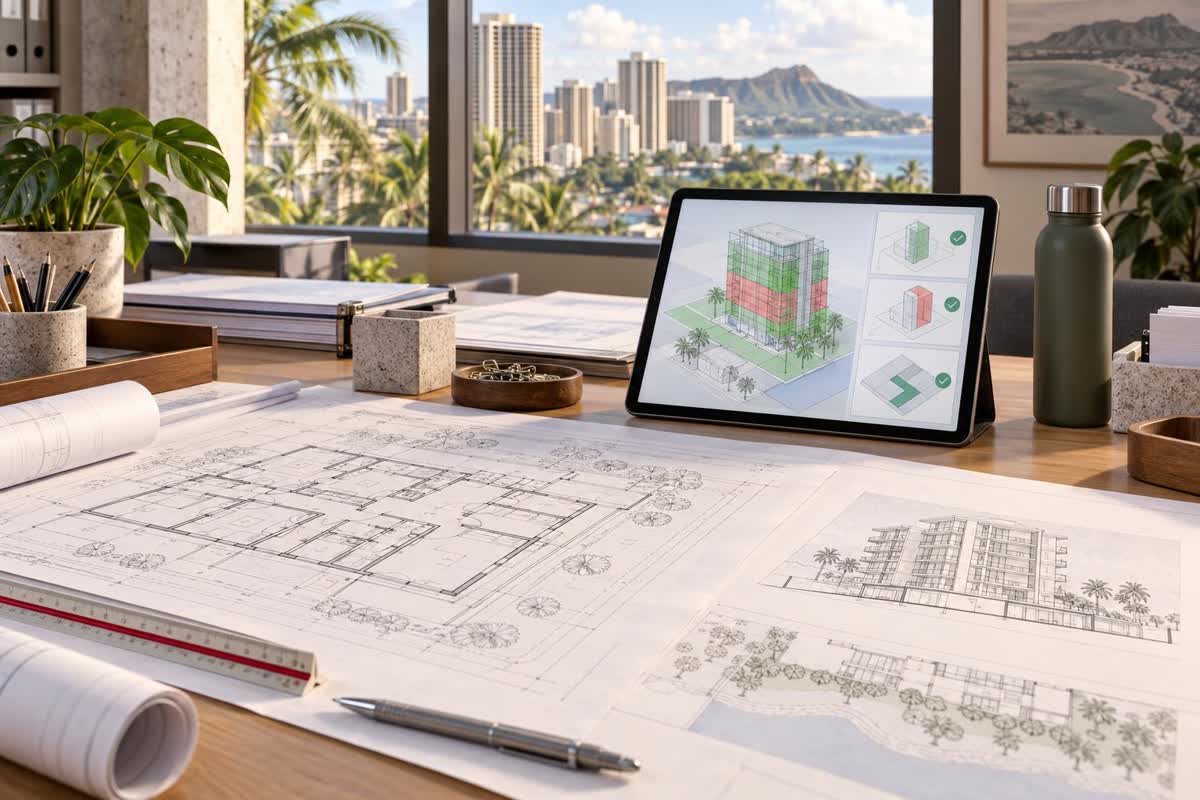
HUD’s October housing showcase made a useful AI claim visible: software can let a user inspect real parcels in 3D, see current construction-cost information, and watch a long due-diligence process compressed into minutes. That is a meaningful workflow change for factory-built housing. It is not evidence that an AI system can approve a site, underwrite a loan, or certify code compliance. The opportunity is an evidence assembly line with a clearly bounded human exception desk.
For builders, housing operators, and public agencies, this distinction matters because factory-built housing crosses more handoffs than a conventional listing: parcel and zoning review, transportation, foundation and installation, energy requirements, appraisal, lending, insurance, and market acceptance. Faster synthesis can remove waiting time. A confident but unsupported answer can move risk downstream to a buyer or tenant.
What changed in the real-estate workflow
HUD’s Next Generation Manufactured Housing Action Plan, published October 7, describes a policy environment that is opening new design and construction pathways. It specifically calls for resources covering chassis-free construction, including zoning, appraisal, lending, insurance, and early project information. In the same showcase series, HUD described a software exhibit that let visitors orbit parcels in 3D and review what new homes cost in real markets.
The signal is not “AI builds the house.” It is that the first pass of feasibility is becoming a connected review: parcel geometry, site constraints, code pathways, construction configuration, and market evidence can be placed in one workspace. A builder may use it to prioritize sites; a planner may use it to identify missing documents; a lender or appraiser may use it to ask for a traceable basis for an assumption.
That is a different product from an automated recommendation. The output should be a dated evidence packet, not a green light.
How the AI-assisted workflow works
A safer workflow has five stages:
- Ingest. Collect parcel boundaries, zoning text, topography, utilities, flood or hazard layers, applicable HUD or local requirements, preliminary plans, and verified cost sources. Record dates and licensing restrictions.
- Normalize. Convert documents and maps into comparable fields: allowable use, setbacks, foundation assumptions, transport route constraints, energy requirements, and unresolved questions.
- Retrieve and explain. Let the model point to the exact source passage or map layer behind each proposed finding. Separate observed facts from model inference and vendor estimates.
- Route exceptions. Send code conflicts, missing surveys, unusual foundations, accessibility questions, appraisal gaps, insurance uncertainty, and fair-housing concerns to named specialists. The system should stop when evidence is incomplete.
- Publish a review packet. Preserve inputs, model version, timestamps, citations, rejected alternatives, reviewer decisions, and the conditions under which the packet expires.
Human review is not a final decorative checkbox. It determines whether a parcel is actually comparable to the examples in the training or retrieval set. A chassis-free design may be technically eligible yet face local installation, lending, insurance, or appraisal friction. The workflow must expose that friction rather than smooth it away.
Who benefits and what could break
Small builders and housing departments may gain the most from faster first-pass research. They often cannot staff a separate specialist for every parcel. Residents could benefit if the saved time is used to evaluate more sites and document affordability or accessibility constraints.
But the risks are concrete. A model can confuse a proposed code pathway with an adopted requirement, reuse stale cost data, miss a parcel-level easement, or infer feasibility from a showcase project that is not representative. Spatial data can reveal sensitive household or neighborhood information. Training data may reflect historic exclusion, and a “market acceptance” score can become a proxy for protected characteristics. Liability also becomes ambiguous if a generated summary is copied into a loan, appraisal, permit, or insurance file.
The practical control is an evidence boundary: every material claim needs a source, date, confidence label, and accountable reviewer. Unsupported claims become blockers, not prose to be edited later.
Practice lab
Exercise: Build a research-only feasibility packet for three publicly documented factory-built housing examples. Do not select a property, seek financing, or make a housing decision.
Inputs and steps: Use the HUD action plan and showcase pages, public zoning and parcel records from one jurisdiction, one published plan set, and a small set of disclosed construction-cost observations. Ask an AI system to extract requirements and create an exception queue. Have a human reviewer verify every citation and label each item as fact, inference, or unresolved.
Baseline, metrics, observation window, and stop condition: Compare the AI-assisted packet with a manual checklist over four research sessions. Measure citation coverage, missing-field rate, reviewer correction count, time to first complete packet, and false “ready” findings. Stop if any material claim lacks a source, if the model invents a requirement, or if reviewer corrections rise while elapsed time falls.
Builder and operator takeaway
- Treat AI as a due-diligence coordinator, not an approval authority.
- Make exception routing and expiry dates part of the product specification.
- Keep appraisal, lending, insurance, accessibility, and tenant-impact questions visible in the same packet.
- Use AI permit checks as upstream intake and AI underwriting’s evidence boundary as adjacent workflow patterns, not substitutes for local review.
Links / sources
- HUD, Next Generation Manufactured Housing Action Plan — describes new factory-built housing pathways and the need to address zoning, appraisal, lending, insurance, and market acceptance.
- HUD, West Coast Housing Innovations Showcase — documents the parcel/3D and compressed due-diligence software exhibit.
- HUD, Southeast Housing Innovations Showcase — documents construction technologies presented as improving productivity, affordability, safety, and quality.